Insulated concrete forms in Edgewater, MD give homeowners near the South River a wall system built for Chesapeake Bay humidity, coastal storms, and rising energy bills. ICF construction locks high-R insulation and steel-reinforced concrete into a single pour, unlike wood framing where insulation gets added as a separate step. Here's what actually changes in your budget, your permit timeline, and your energy bill once the forms go up.
What Is ICF Construction?
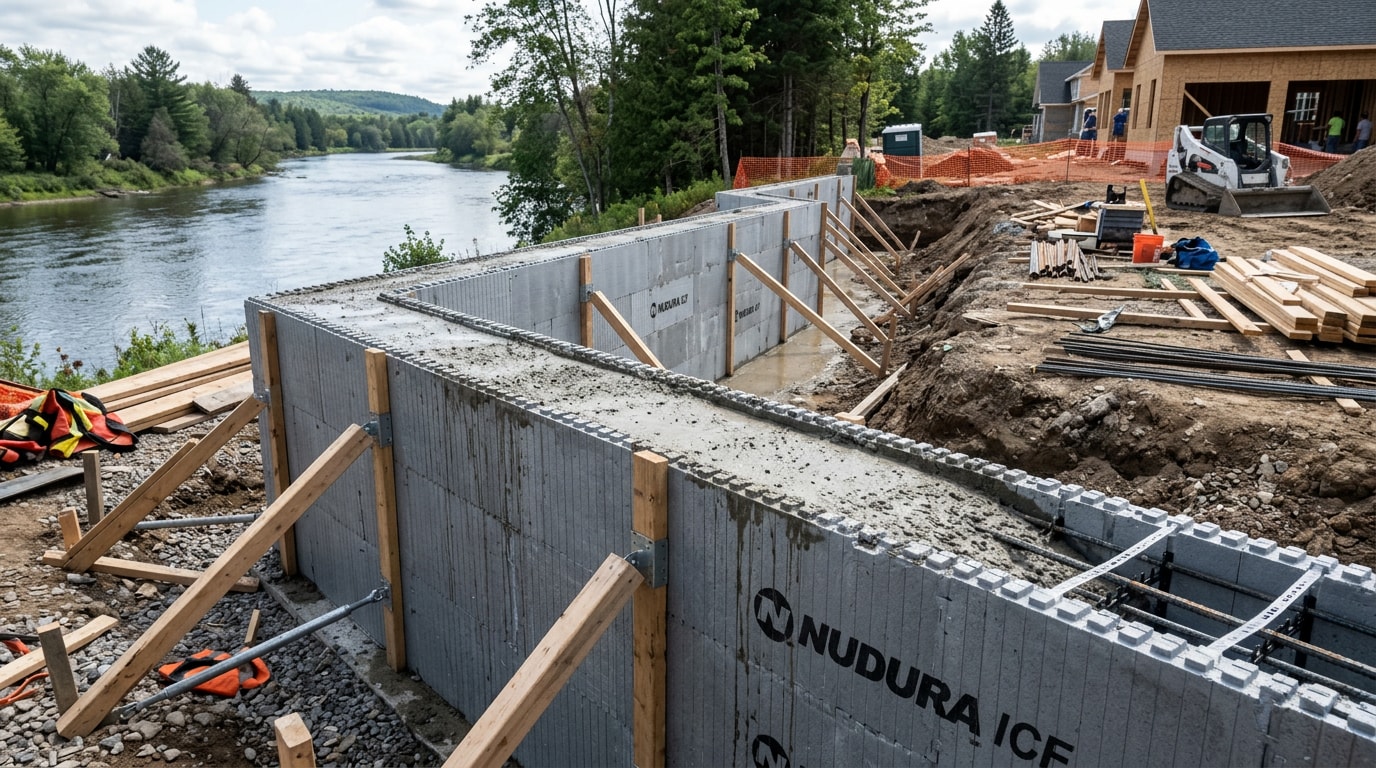
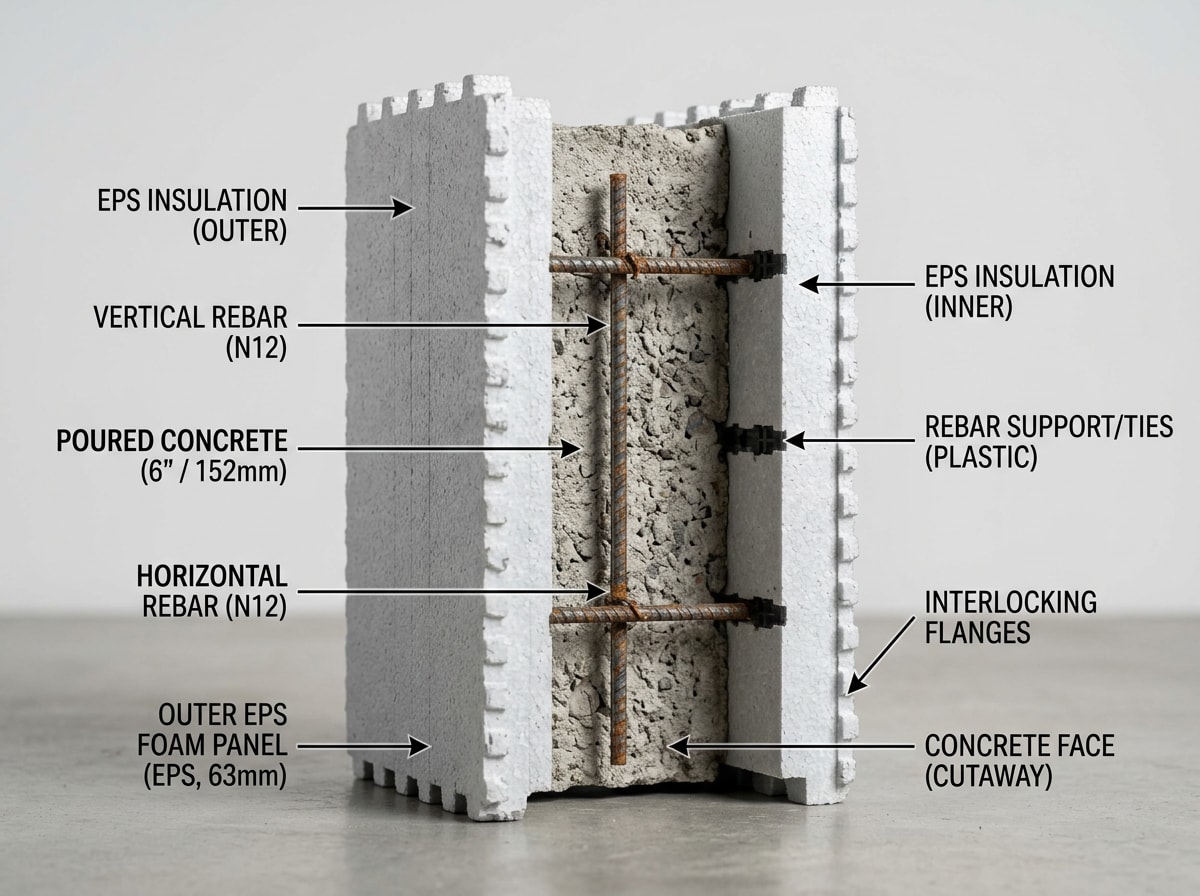
Insulated concrete forms are interlocking foam blocks that stay permanently in place while crews pour reinforced concrete inside them, creating an insulated, structural wall in one step. This differs from wood framing, where insulation gets added after the frame goes up.
ICF blocks typically come in two configurations. A flat-wall system produces a solid concrete core of uniform thickness, while a waffle-grid system uses closely spaced vertical and horizontal concrete members to cut down on concrete volume. Builders in Anne Arundel County working near tidal water, including Edgewater homeowners, often prefer flat-wall systems below grade for the added consistency.
Key Benefits of ICF Formwork for Edgewater Homes
Once the basic assembly makes sense, the appeal becomes clearer. Homeowners near the South River typically weigh three advantages: energy performance, durability, and resistance to moisture. Each one plays out a little differently depending on how close your lot sits to the water.
Energy Efficiency & Lower Energy Bills
Continuous insulation drives most of ICF's energy performance. A resource guide from the Pacific Northwest National Laboratory notes that ICFs can provide continuous wall insulation from roof to footing with very little thermal bridging, with one documented home reaching R-40 wall insulation. Most residential ICF systems land lower than that, generally in the R-20 to R-26 range for the whole wall assembly.
It's worth knowing that whole-wall R-value and the concrete's own insulating value aren't the same number. Concrete itself insulates poorly on its own, so the foam layers, not the concrete, do most of the work. The concrete core still adds thermal mass, which slows heat transfer and can smooth out temperature swings through Maryland's humid summers, but the size of that benefit depends on your home's design and HVAC setup rather than a flat percentage.
Unmatched Durability & Disaster Resistance
Reinforced concrete gives ICF walls strength that stick-built walls can't match. Poured concrete walls resist racking, impact, and sustained wind loads better than standard framing. Insulated concrete forms were formally added to the International Residential Code in 2006, and current IRC and IBC editions, developed by the International Code Council, include prescriptive standards for ICF wall assemblies that most jurisdictions, including Anne Arundel County, now enforce. Ask your contractor for the specific wind and structural ratings tested for your plans rather than a generic marketing figure.
Mold & Moisture Resistance
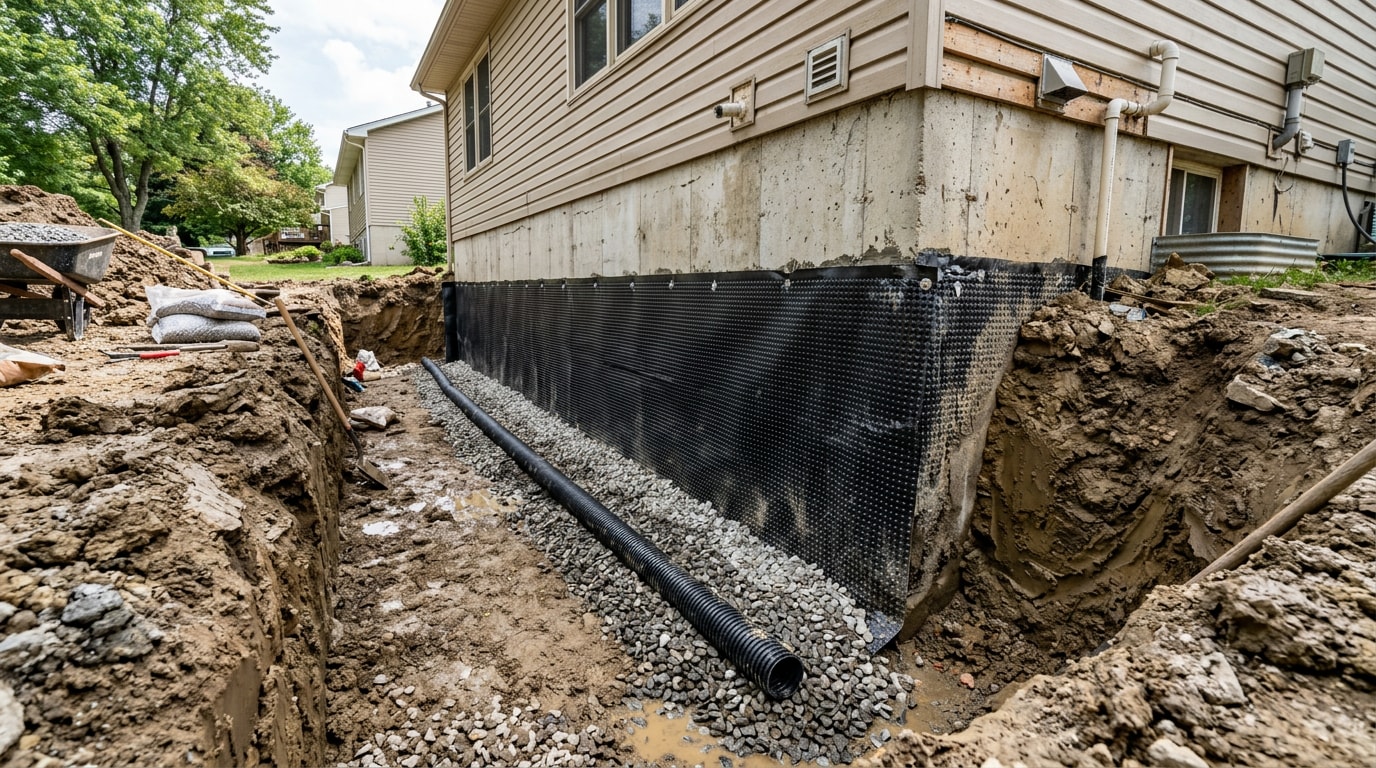
Foam doesn't feed mold the way wood framing can, and a properly sealed ICF wall limits the air gaps where moisture tends to collect. That combination supports better long-term moisture control, which matters in a tidal community like Edgewater where crawl spaces and below-grade walls sit closer to the water table. Flashing, drainage, and grading around the foundation still matter regardless of wall type, so site prep deserves as much attention as the forms themselves.
ICF Cost in Edgewater, MD: 2026 Pricing
Cost is usually the first question homeowners ask, and it's also where marketing pages tend to get vague. Below are the national ranges most cost guides are currently citing for 2026, which give you a realistic starting point before you request a project-specific quote.
| Cost Component | Typical Range | Notes |
|---|---|---|
| ICF block material only | $4–$8 per sq ft of wall area | Forms only, not concrete, rebar, or labor |
| Installed ICF foundation wall | $22–$45 per sq ft of wall area | Includes concrete, reinforcement, and labor |
| Full ICF home, finished | $120–$230 per sq ft of total floor area | Varies by region, floor plan, and finish level |
| Premium over comparable wood framing | Roughly 15%–20% upfront | Often offset over time by lower energy bills |
These figures line up with national data from cost-tracking sites and reflect broad U.S. averages rather than an Edgewater-specific bid. Wall height, grading conditions, window openings, and site access near the South River all move the final number. For an estimate based on your actual lot and plans, request a free estimate rather than budgeting off a national average alone.
Permits & Inspections for ICF Builds in Anne Arundel County
Edgewater falls under Anne Arundel County's permitting authority, and ICF projects go through the same Land Use Navigator process as any other new construction or major addition. Only a licensed contractor can pull the building permit on your behalf.
Expect these inspection stages before, during, and after the pour:
- Footing inspection before concrete is placed
- Foundation wall inspection
- Backfill inspection once below-grade walls are complete
- Framing and insulation inspections before drywall goes up
- Final inspection before occupancy
Anne Arundel County's Inspections Team checks that field work matches the approved plans, and re-inspection fees apply if work isn't ready when scheduled. Because ICF foundations depend on proper footing depth and drainage, especially on lots graded toward the South River, getting site grading and preparation right before the forms arrive saves you a failed footing inspection later.
Choosing an Experienced, Warrantied ICF Builder
ICF rewards good installation and punishes bad installation. Improper bracing or an uneven pour can cause blowouts or voids in the concrete, so crew experience matters as much as materials. A trained ICF crew should walk you through bracing plans and inspection points before work starts.
Our crews handle grading, footings, and concrete flatwork for several ICF-adjacent projects around the South River every year, and the rework calls we get almost always trace back to the same issue: bracing rushed ahead of the pour, not a bad block. Richard Emge, owner of EMG Paving & Roofing and a Maryland Home Improvement Commission-licensed contractor, has overseen site prep and concrete work across Anne Arundel County for years and has seen firsthand how much a properly graded, well-drained site protects an ICF foundation long after the forms are stripped from view.
Ask any contractor serving Anne Arundel County and Edgewater for references, and get warranty terms in writing covering both workmanship and structural integrity. If your project also touches Annapolis or neighboring communities, confirm the same crew and warranty terms apply there too.
Cast-In-Place (CIP) vs. ICF Concrete Walls
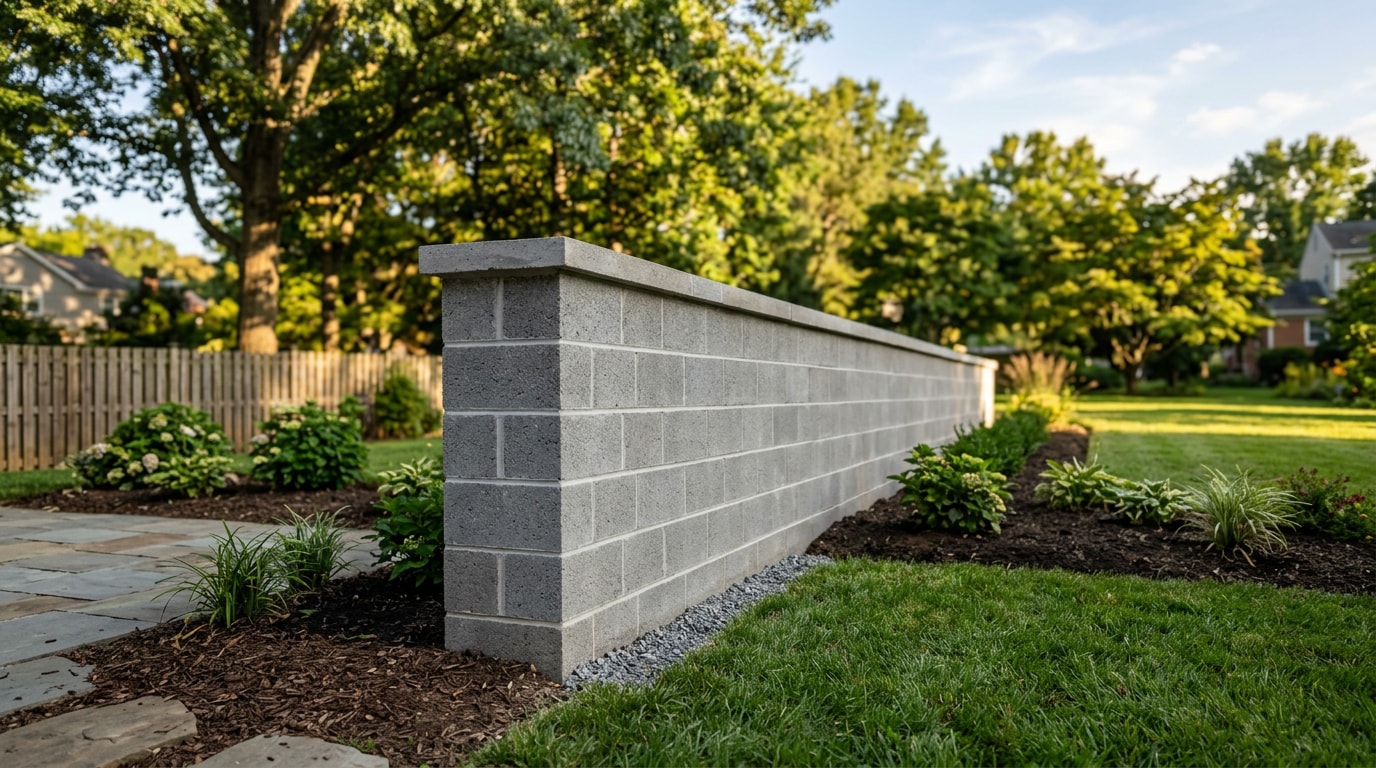
Both methods pour concrete to build a wall, but they differ in what happens to the forms afterward. Cast-in-place concrete typically uses removable forms, stripped away once the concrete cures, leaving a bare wall that needs insulation added separately. ICF leaves the foam in place permanently as built-in insulation.
CIP often costs less upfront and suits large commercial walls, while ICF tends to cost more per square foot but reduces separate insulation and framing labor. The U.S. Department of Housing and Urban Development's cost-benefit research on insulating concrete forms found energy efficiency rated excellent for ICF versus adequate to excellent for wood framing, a trade-off worth weighing against your specific budget and timeline. For a closer look at how concrete block systems compare on cost, see our Concrete Blocks in Harford County, MD pricing guide, which breaks down a related set of material and labor factors.
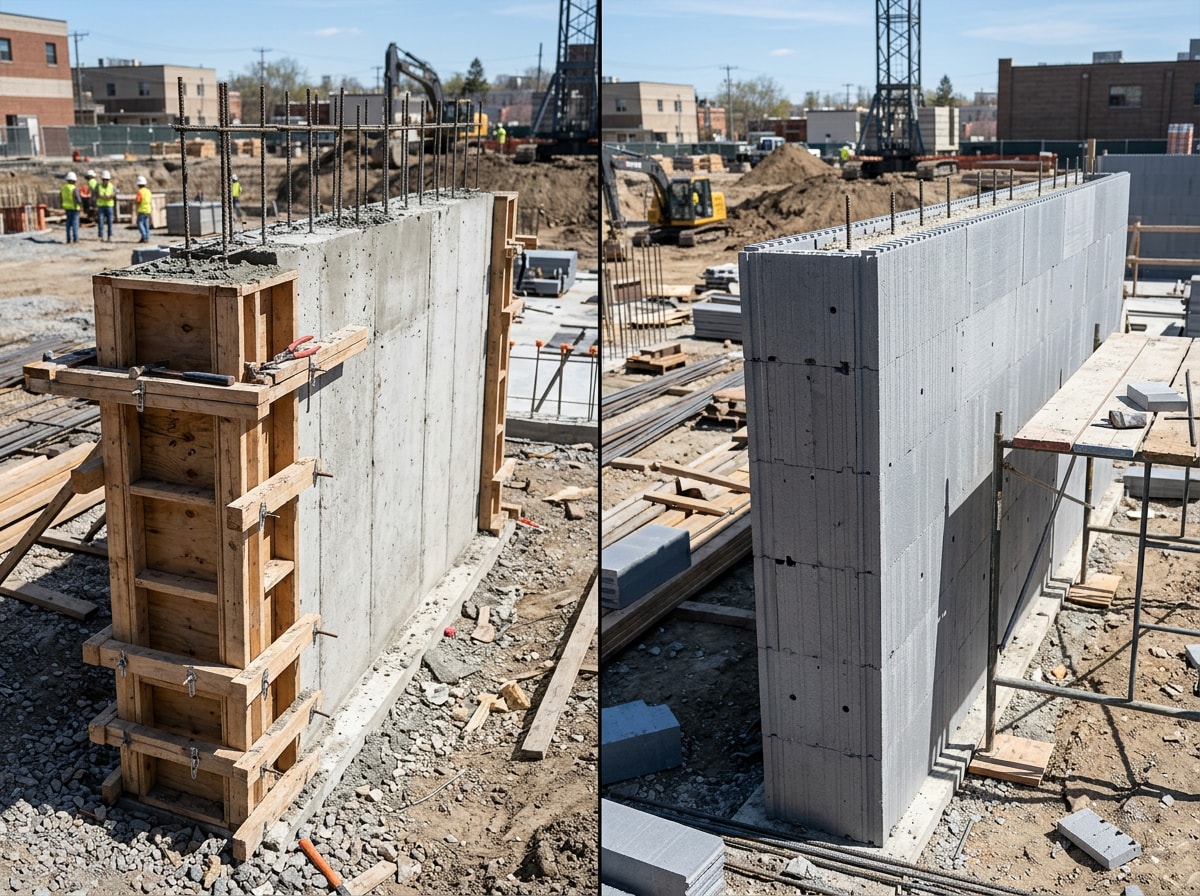
Before committing to either method, browse examples of completed concrete and site work in our project gallery, or start on the homepage to see the full range of services we offer around Anne Arundel County.
FAQ
What is ICF construction?
ICF construction uses stacked foam blocks as permanent, insulated forms for poured concrete walls, combining structural support and insulation into a single reinforced assembly.
What are the thermal benefits of ICF?
ICF walls combine insulating foam with the thermal mass of concrete, so indoor temperatures swing less and HVAC systems cycle less often than with standard wood framing. The exact benefit depends on your climate and how the home is designed.
Is ICF construction more expensive than wood framing?
Yes. ICF typically costs roughly 15% to 20% more upfront than comparable wood-frame construction, mainly due to material and specialized labor costs. That premium is often offset over time through lower heating and cooling bills, though payback periods vary by region and energy prices.
How much does ICF construction cost per square foot?
Installed ICF for a complete home typically runs $120 to $230 per square foot of total floor area, while ICF foundation walls alone run roughly $22 to $45 per square foot of wall area. Site conditions near the South River, wall height, and finish level all move these numbers, so request a quote based on your actual plans.
What is a disadvantage of insulated concrete forms?
ICF limits some flexibility after the pour. Running new electrical or plumbing lines through a cured ICF wall is harder than with wood framing, since conduit and boxes need to be planned before the concrete sets. Crews also need ICF-specific bracing experience; a poorly braced pour risks blowouts that are expensive to repair.
Do I need a permit for ICF construction in Edgewater, MD?
Yes. Edgewater falls under Anne Arundel County's building permit process, which requires footing, foundation, backfill, and final inspections for new construction and major additions, the same as any other wall system.
Ready to plan your ICF foundation or site work? Get a free estimate and we'll walk your lot, review your plans, and give you a grading and concrete timeline built around Anne Arundel County's permit and inspection schedule.