Wedge anchors for concrete in Carroll County, MD hold railings, bollards, post bases, and equipment to the slabs, patios, and footings local crews pour from Westminster to Eldersburg to Taneytown. Get the diameter, embedment depth, or material wrong and the fixture fails long before the concrete does. This guide breaks down real sizing rules, published load data, and installation steps so the anchor holds the first time.
What Is a Wedge Anchor?
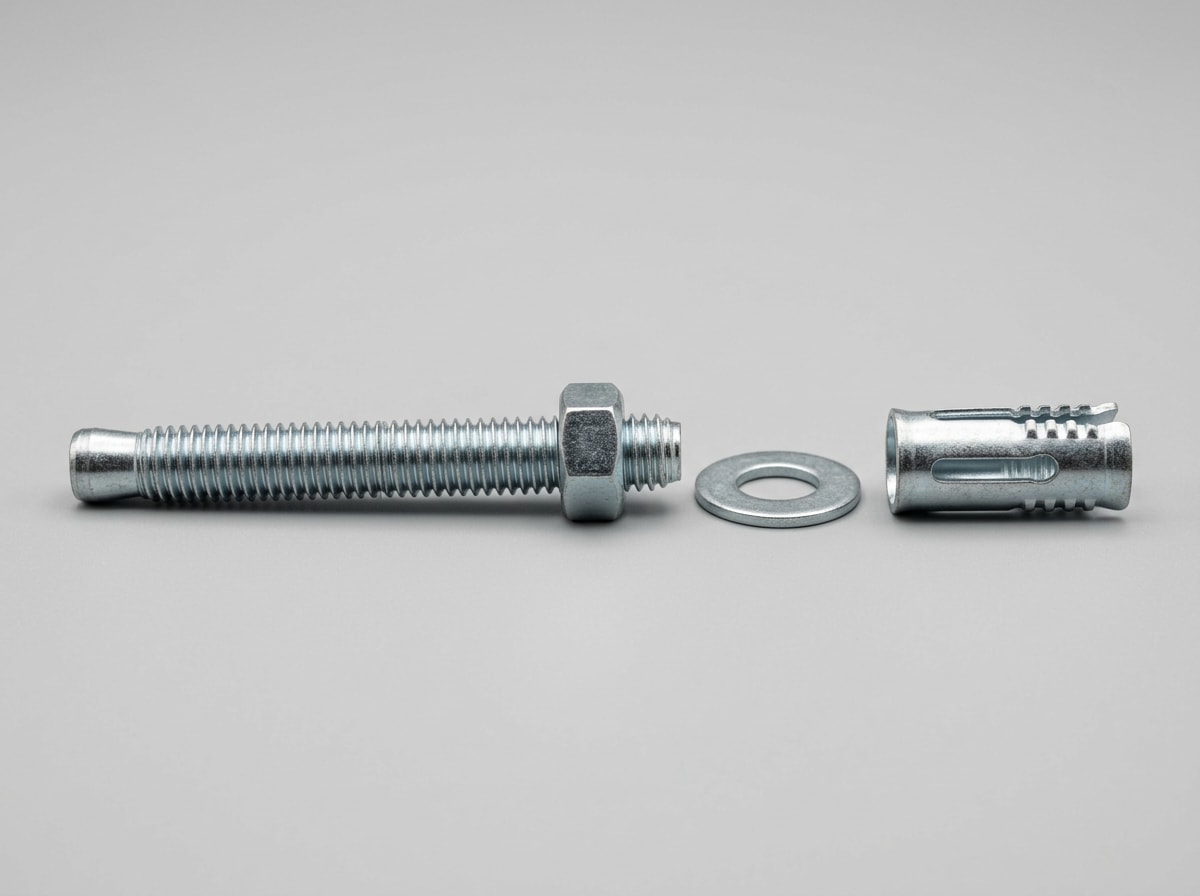
A concrete wedge anchor is a mechanical fastener used to secure fixtures into solid concrete. It has four parts: a threaded stud, hex nut, washer, and an expansion clip at the base. As the nut is tightened, the clip expands against the drilled hole and creates a tight mechanical grip.
This expansion mechanism is why a wedge anchor falls under the broader category of expansion anchor. Wedge anchors are built for solid, dense concrete. Wedge-style expansion anchors are for use in solid concrete or grout-filled concrete masonry. They're not a fit for hollow block, brick, or mortar joints, a distinction that comes up again in the Common Mistakes section below.
Our crews install post bases, stair rails, and bollards into dozens of patios, walkways, and equipment pads across Carroll County every season, so hole placement and cleanout aren't theoretical for us. The same rules below apply whether you're anchoring a mailbox post or a loading dock rail.
If your project includes a new concrete pad, patio, or walkway in Carroll County, our hardscape installation crews can pour it and flag anchor placement before fixtures ever go in. Get a free estimate before you drill.
Choosing the Right Size: Diameter, Embedment, and Material
Choosing the correct concrete wedge anchor comes down to three variables: diameter, embedment depth, and material. Get any one of these wrong and you risk an anchor that looks secure but fails under real load.
Diameter
Wedge anchor diameter should match both the fixture's bolt-hole size and the load the connection needs to carry. Common sizes range from 1/4 inch up to 3/4 inch, with 3/8 inch and 1/2 inch covering most residential and light-commercial jobs: railings, shelving brackets, ledger boards, and equipment mounts.
Bigger isn't automatically better. An oversized anchor needs a wider, deeper hole, which can put it too close to an edge or a crack in older slabs common around Carroll County's outbuildings and farmhouses.
Embedment Depth
Embedment depth is the single biggest factor in how much weight a wedge anchor can hold. A solid rule of thumb: embed the anchor at least 4 to 5 times its diameter into solid concrete to reach full rated holding power.
For a 1/2-inch wedge anchor, that works out to roughly 2 to 2.5 inches of embedment, measured into the concrete itself, not counting the fixture's thickness. Skimping on embedment is one of the fastest ways to undercut load capacity, even when diameter and material are correct.
When you drill, plan the hole depth around the anchor's full length, not just the embedment figure, since extra depth is needed for the anchor tip and leftover dust.
Material and Coating
Wedge anchors come in a few standard finishes:
- Zinc-plated – the most economical option, fine for dry, indoor applications.
- Mechanically galvanized – adds a thicker protective layer for outdoor use or damp basements and crawlspaces, a realistic scenario in plenty of older Carroll County homes.
- Stainless steel – the strongest long-term choice for outdoor installations exposed to humidity, road salt, or repeated freeze-thaw cycling, at a higher upfront cost.
As a rule, match the coating to the exposure: indoor and dry gets zinc, outdoor and damp gets galvanized or stainless.
How Much Weight Can a Wedge Anchor Hold?
Before trusting any weight rating on the box, it helps to understand two different numbers: ultimate load and allowable working load. Confusing the two is a common, and potentially dangerous, mistake.
Manufacturers often advertise ultimate load on packaging, the exact force required to cause total failure. That number should never be treated as a safe working limit. Anchor design methodology for commercial and structural work runs through ACI 318 Chapter 17, "Anchoring to Concrete," which covers anchor design and recognizes post-installed concrete screw anchors along with other anchor types , and that code framework is where the working safety margin comes from.
Here's what that margin looks like in a real published spec sheet for wedge anchors in 4,000 psi concrete:
| Diameter | Embedment | Ultimate Tension | Allowable Tension |
|---|---|---|---|
| 1/4" | 1 1/8" | 960 lbs | 240 lbs |
| 1/4" | 2 1/4" | 2,320 lbs | 580 lbs |
| 3/8" | 1 3/4" | 2,880 lbs | 720 lbs |
| 3/8" | 3 3/8" | 5,440 lbs | 1,360 lbs |
| 1/2" | 2 1/4" | 5,280 lbs | 1,320 lbs |
| 1/2" | 4 1/2" | 11,840 lbs | 2,960 lbs |
Size, embed depth, critical spacing, ultimate pounds, allowable pounds, and install torque data from a 4,000 psi concrete rating chart show something worth noting on their own: at every embedment depth, the allowable figure is exactly one-fourth of the ultimate figure. That's the safety factor in action, not a marketing estimate.
It also shows why embedment matters so much. For a 1/2-inch anchor alone, allowable tension more than doubles between minimum embedment (2 1/4 inches) and deeper embedment (4 1/2 inches) in that same 4,000 psi concrete. Diameter and material matter, but depth is doing real work here too.
These published numbers assume a specific concrete strength. Manufacturer evaluation reports typically cover a defined range. Wedge anchors are commonly rated to resist static, wind, and seismic tension and shear loads in uncracked concrete with a specified compressive strength from 2,500 psi to 8,500 psi. Always check the anchor's specific published data, including its ICC-ES evaluation report, before finalizing a design, since figures vary between brands and products.
Step-by-Step Wedge Anchor Installation
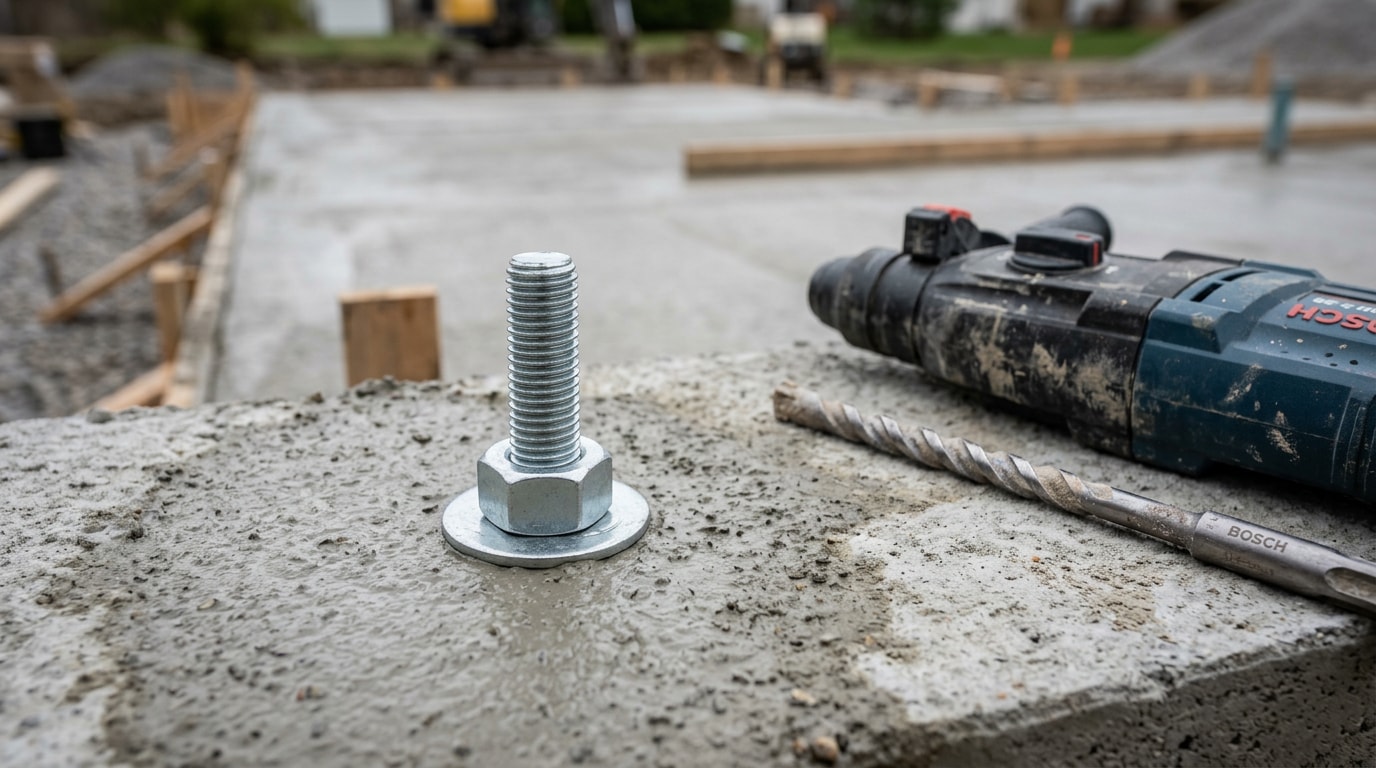
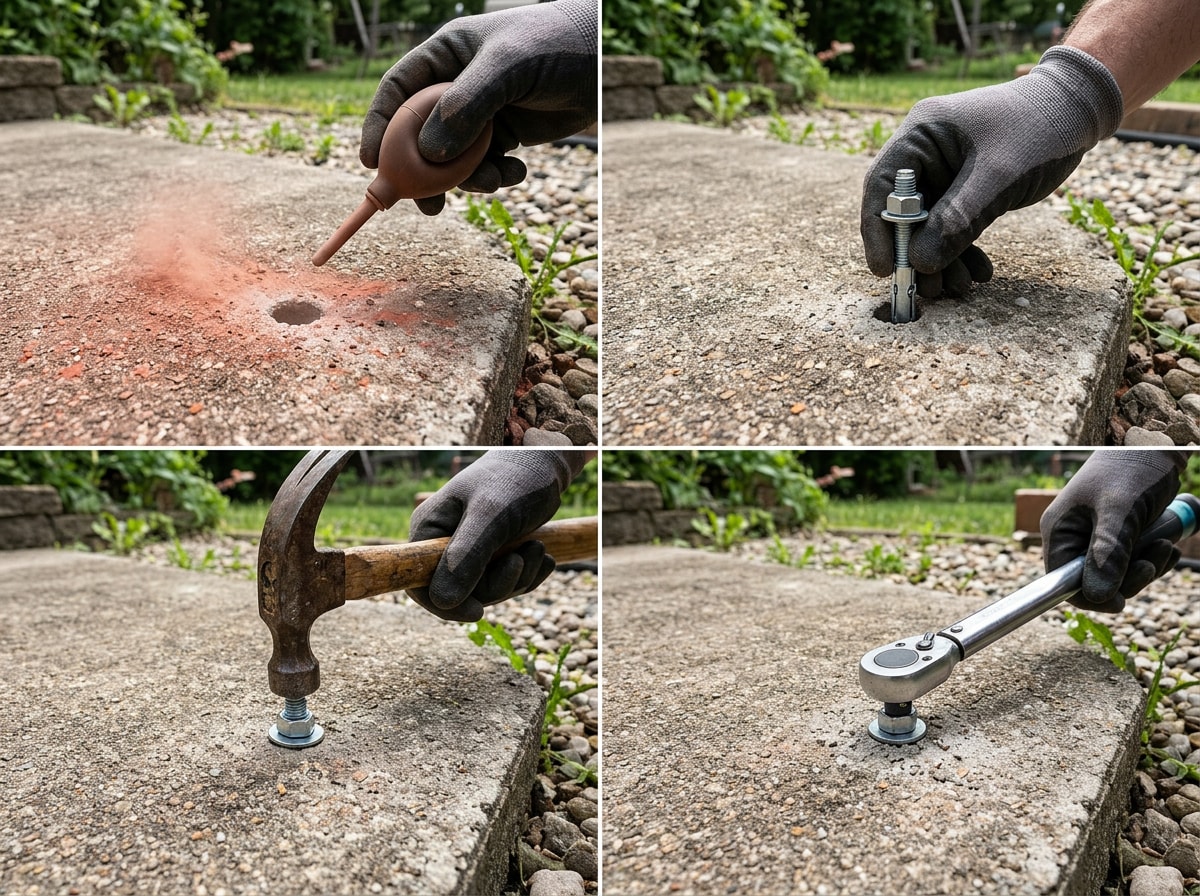
Even the right anchor underperforms if it's installed poorly. Gather a hammer drill, a carbide-tipped masonry bit matched to the anchor diameter, a shop vacuum or blower, and a socket or torque wrench. Then work through these five steps in order.
- Mark the anchor locations. Position the fixture exactly where it needs to go, then mark each hole through the fixture's bolt holes. Double-check the layout before drilling anything, since you can't undo a hole once it's in the concrete.
- Drill the holes. Use a hammer drill and a carbide-tipped bit sized to match the anchor's diameter. Drill at least 1/2 inch deeper than the required embedment to leave room for dust and the anchor tip.
- Clean the holes. Blow or brush out all dust and debris before inserting the anchor. A dirty hole keeps the expansion clip from making full contact with the concrete, which noticeably reduces holding strength even when every other step was done correctly.
- Insert the anchor. Insert it clip-end first, with the nut and washer threaded onto the outward-facing end. Tap the top gently with a hammer until the nut and washer sit flush. Don't force it; if the anchor won't seat, check that the hole is deep and clean enough first.
- Tighten the nut. Use a socket or torque wrench to tighten to the manufacturer's recommended torque. This final turn sets the expansion clip and activates the anchor's full holding power. Over-tightening can shear the stud or crack the surrounding concrete, undoing the strength a correctly embedded anchor should have.
Common Mistakes to Avoid
Wedge anchors fail for predictable reasons, and most trace back to one of a handful of installation mistakes.
- Wrong base material. These anchors are built only for solid concrete. Installing one in hollow block or brick can crack the material or leave the anchor without enough density to resist the expansion force.
- Shallow drilling. If the hole isn't deep enough, the anchor bottoms out before the nut reaches full tightness, leaving the expansion clip only partially engaged. Always drill extra depth to give yourself margin.
- Skipping cleanout. Leftover dust is one of the most common, and most avoidable, causes of a weak hold.
- Guessing at load. On anything structural, or anywhere a fall-protection anchorage is involved, don't eyeball it. For personal fall arrest systems specifically,
anchorage points must be capable of supporting 5,000 pounds per worker attached, or be designed by a qualified person with a safety factor of at least two , under OSHA's fall protection standard. An undersized or poorly seated anchor can fail under load with real safety consequences.
Wedge Anchors vs. Other Concrete Anchors
Wedge anchors aren't the only mechanical fastener for concrete, and knowing where they fit against the alternatives saves a wasted trip to the hardware aisle.
| Anchor Type | Best Base Material | Removable? | Typical Use |
|---|---|---|---|
| Wedge anchor | Solid, uncracked concrete | No, permanent | Railings, equipment mounts, structural connections |
| Sleeve anchor | Concrete, brick, hollow block | No, permanent | Mixed masonry walls, lighter fixtures |
| Epoxy (adhesive) anchor | Cracked or lower-density concrete | No, permanent | Rebar dowels, high-capacity structural work |
Wedge anchors are typically used to fasten guardrails and signposts to roadways and other structures, and manufacturing companies often use them to attach heavy machinery , which is a close match for the rails, bollards, and equipment pads common on Carroll County commercial properties. Sleeve anchors trade some strength for versatility across brick and block. Epoxy anchors bond chemically rather than mechanically and often outperform wedge anchors in cracked or lower-density concrete, but they require cure time and aren't a same-day solution.
For most dense, solid-concrete jobs, slabs, footings, and foundation walls common throughout the county, wedge anchors remain the simplest, most cost-effective option. Skip them in favor of a sleeve or epoxy anchor when you're working with cracked concrete, hollow masonry, or an application that needs to be removable later.
Hiring Help for Concrete and Site Work in Carroll County
Sizing and installing an anchor correctly only matters if the concrete underneath it is sound. Cracked, poorly graded, or undersized slabs undercut even a perfectly installed wedge anchor.
If you're planning new work rather than retrofitting an existing slab, our site grading and preparation and walkway and patio installation teams handle the concrete and hardscape side so whatever you anchor into it, rails, post bases, signage, or equipment, has a stable foundation. You can see examples of recent work on our projects page.
We serve homeowners and property managers throughout the Carroll County, MD area, along with nearby Harford, Baltimore, and Frederick counties. Contact us for a free estimate on your next paving, grading, or hardscape project, and visit our homepage to see the full range of services we offer.
About the Author
This guide was reviewed by the site-work team at EMGE Paving and Roofing, a Maryland paving, grading, and roofing contractor serving Carroll County and the surrounding region. Questions about a specific site or slab? Reach out through our contact page.
FAQ
How deep should a wedge anchor go?
A concrete wedge anchor should be embedded at least 4 to 5 times its diameter into solid concrete. For example, a 1/2-inch anchor needs roughly 2 to 2.5 inches of embedment, measured into the concrete itself and excluding the fixture's thickness. Going shallower reduces embedment depth and cuts significantly into rated holding power.
How much weight can a wedge anchor hold?
It depends on diameter, embedment depth, and concrete strength. Published spec sheets show a 1/2-inch anchor ranging from roughly 1,320 lbs to nearly 3,000 lbs allowable tension depending on embedment, in 4,000 psi concrete. Always check the manufacturer's published data for the specific anchor you're using, since figures vary between brands.
What size wedge anchor should I use?
Add together three numbers: the thickness of the fixture you're attaching, the anchor's minimum embedment depth for its diameter, and a small allowance, usually 1/4 to 1/2 inch, for the nut and washer. That total gives you the minimum anchor length needed. Round up to the nearest standard length rather than down.
What is the minimum concrete thickness for wedge anchors?
As a general guideline, the slab should be at least twice as thick as the anchor's embedment depth. Thin slabs or toppings often can't accept anything beyond a 3/8-inch anchor without risking a blowout at the bottom.
What's the difference between a wedge anchor and a sleeve anchor?
A wedge anchor is built for solid, dense concrete only and generally holds more weight. A sleeve anchor works across concrete, brick, and hollow block, which makes it more versatile but typically lower-capacity in solid concrete.
Can a wedge anchor be removed once it's installed?
Not cleanly. Wedge anchors are designed as permanent fasteners; the expansion clip locks against the concrete and doesn't retract. If you need a removable connection, a sleeve anchor or a mechanical fastener designed for removal is a better choice from the start.