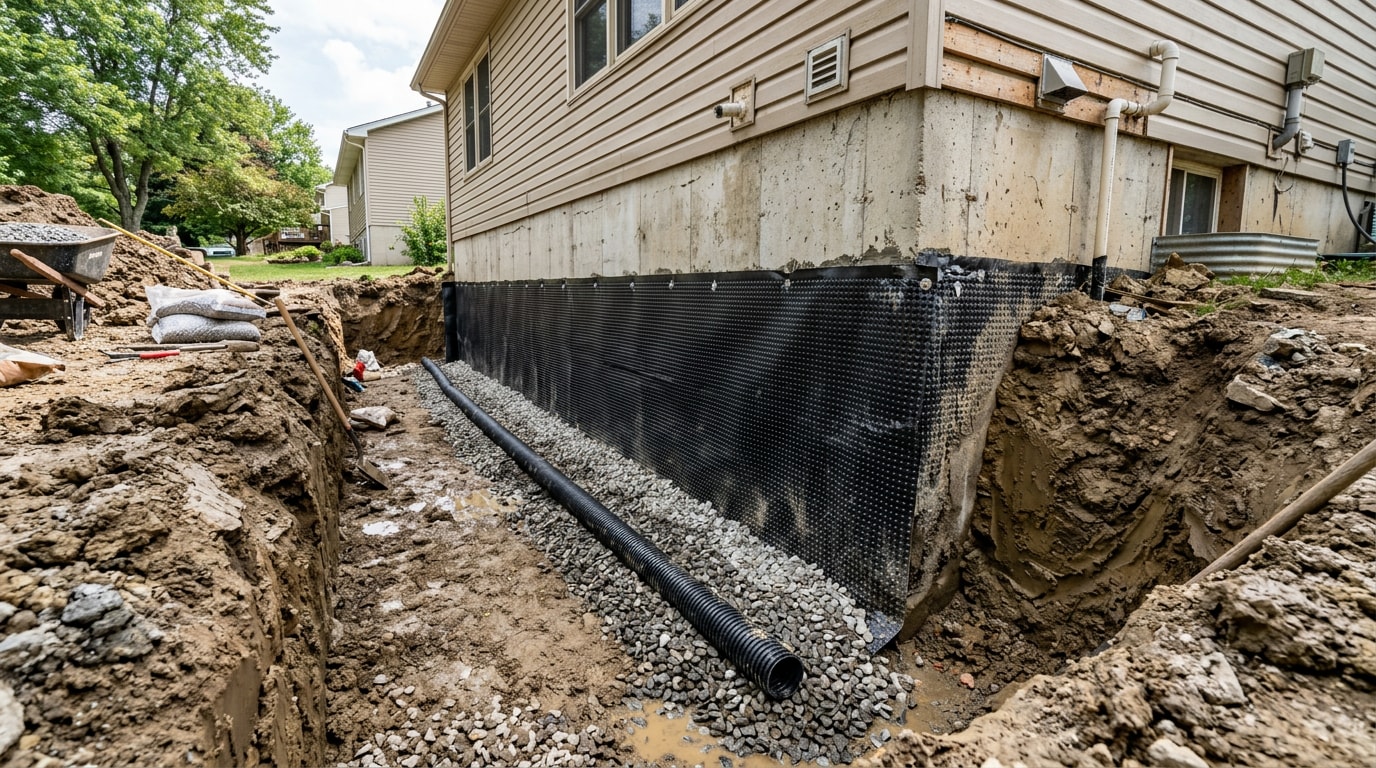
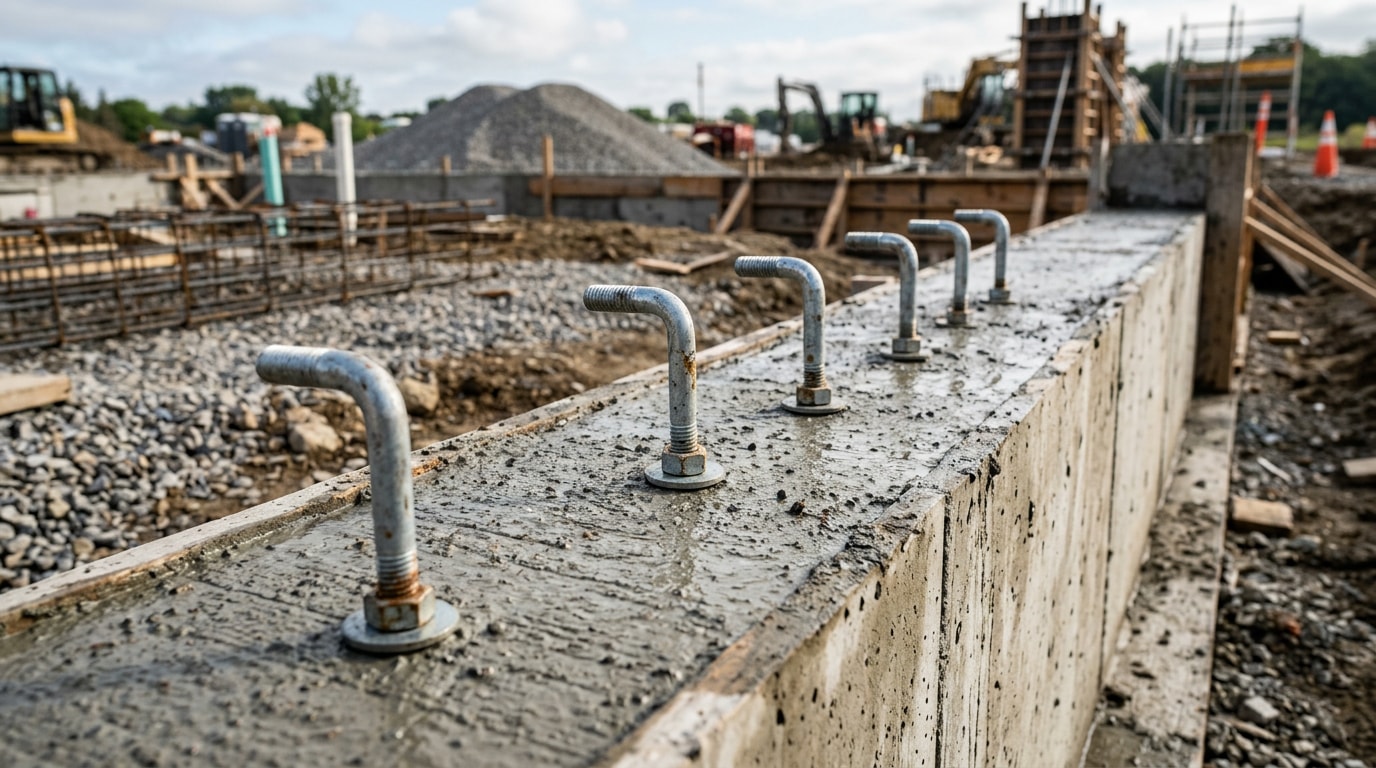
Concrete anchor bolts in Baltimore County, MD have to answer to two things at once: the local building code and the region's clay-heavy, freeze-thaw soil. Get the diameter, embedment, or spacing wrong and an inspector will send you back to the drawing board, or worse, the bolt fails quietly years later. This guide covers the types, sizing rules, and installation steps a contractor or an informed homeowner needs before the next pour or retrofit.
Why Anchor Bolts Matter for a Baltimore County Foundation
Foundation anchor bolts create the physical connection between a concrete foundation and the framing above it. Without them, a house has no mechanical link holding the wood sill plate to the slab or footing below, so wind uplift, lateral loads, and settling could shift the structure over time.
That connection carries extra weight here. Baltimore County's clay-heavy soils expand and contract with moisture, and winter freeze-thaw cycles put repeated stress on foundations. Our crews see the aftermath on retrofit calls across Towson, Dundalk, and Catonsville: a bolt that was undersized or placed too close to an edge almost always shows up as a cracked sill plate connection or a loose deck ledger a few years later. If you're not sure which anchor type fits your project, our team can walk through the specifics before you buy hardware.
Anchor Bolt Sizing and Code Requirements (IRC R403.1.6)
Most residential sill plate applications start at a code-minimum bolt diameter of 1/2 inch, though larger structures or higher wind-load areas often call for bigger hardware. Diameter is only part of the equation. Embedment depth and bolt spacing matter just as much for holding capacity.
Anchorage of wood sill plates and wood wall sole plates is called out in Section R403.1.6 of the IRC, requiring ½-inch anchor bolts embedded 7 inches into concrete or grouted cells of masonry and spaced at no more than 6 feet on center.
A minimum of two anchor bolts are required in each plate, with an anchor bolt required within 12 inches but not closer than 7 bolt diameters from each plate end.
Nuts and washers must be installed, and for braced wall lines in higher seismic design categories (and townhouses in Category C), larger 3-inch by 3-inch plate washers are required.
Maryland and Baltimore County adopt the International Residential Code with state and local amendments, so the base IRC text isn't always the final word. A licensed local contractor should confirm the current locally adopted edition rather than relying on a generic summary. The ICC's official IRC foundation anchorage text is a solid starting reference, alongside the county's own building-department guidance.
Placing bolts too close together, or too near the edge of the concrete, can cause cracking and anchor failure, especially with expansion-style hardware. Each anchor develops a cone-shaped stress zone in the surrounding concrete. Crowd two anchors too close and those cones overlap, robbing both of their rated capacity.
| Anchor Type | Typical Diameter | Minimum Embedment | Minimum Spacing |
|---|---|---|---|
| J-Bolt | 1/2" – 5/8" | 7" (IRC minimum) | 6x bolt diameter |
| L-Bolt | 1/2" – 3/4" | 7" – 12" | 6x bolt diameter |
| Wedge Anchor | 1/4" – 3/4" | 2.5" – 6" (per product) | per manufacturer data sheet |
Treat these numbers as a starting reference, not a substitute for engineering plans. Actual requirements shift with load, seismic category, and local code amendments.
Types of Anchor Bolts for Concrete Foundations
Anchor bolts fall into two broad installation families. Some are set into wet concrete before it cures, becoming a permanent part of the pour. Others go in after the concrete has fully hardened, using mechanical or chemical means to grip the cured material.
Cast-in-Place J-Bolts and L-Bolts
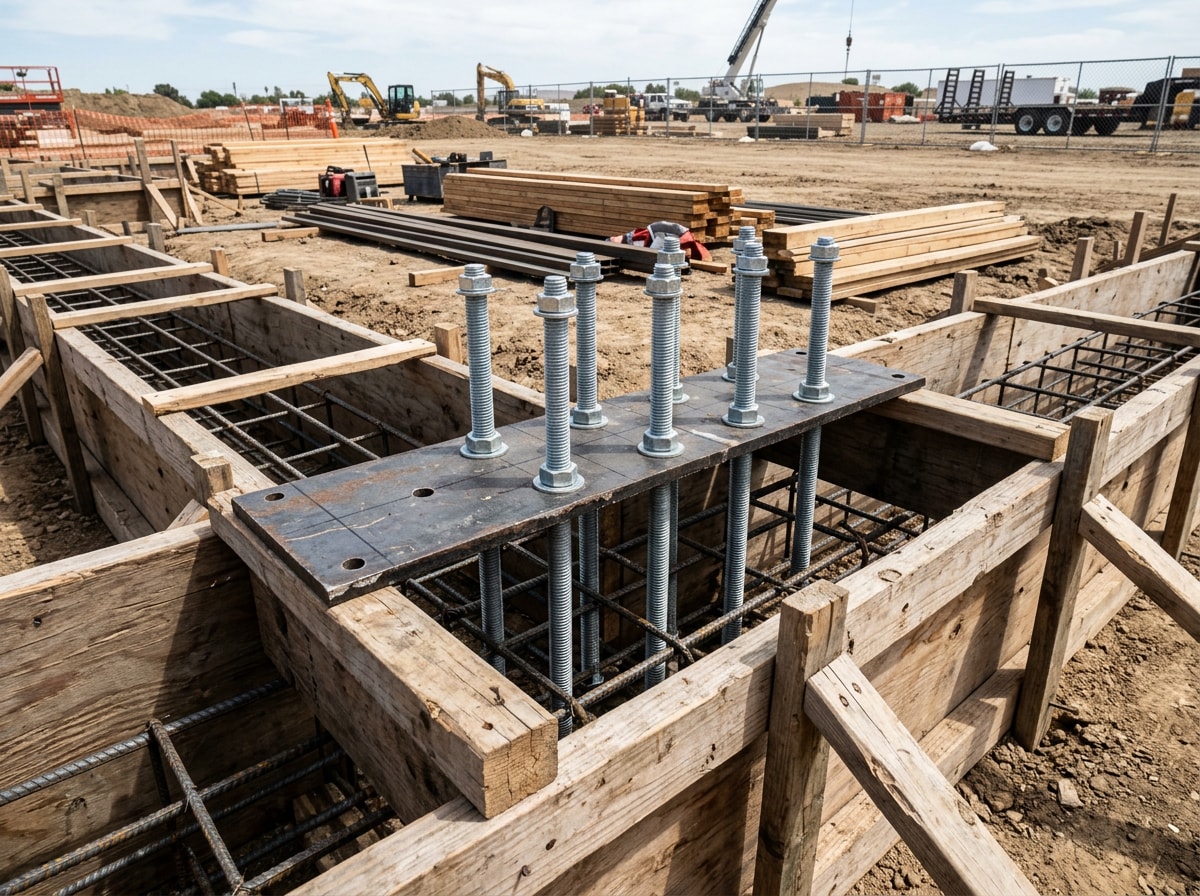
Cast-in-place anchor bolts go in before the concrete cures, making them the standard choice for new foundation construction. They're set directly into the wet mix, embedded to a specified depth, and left to cure in place with no drilling required later.
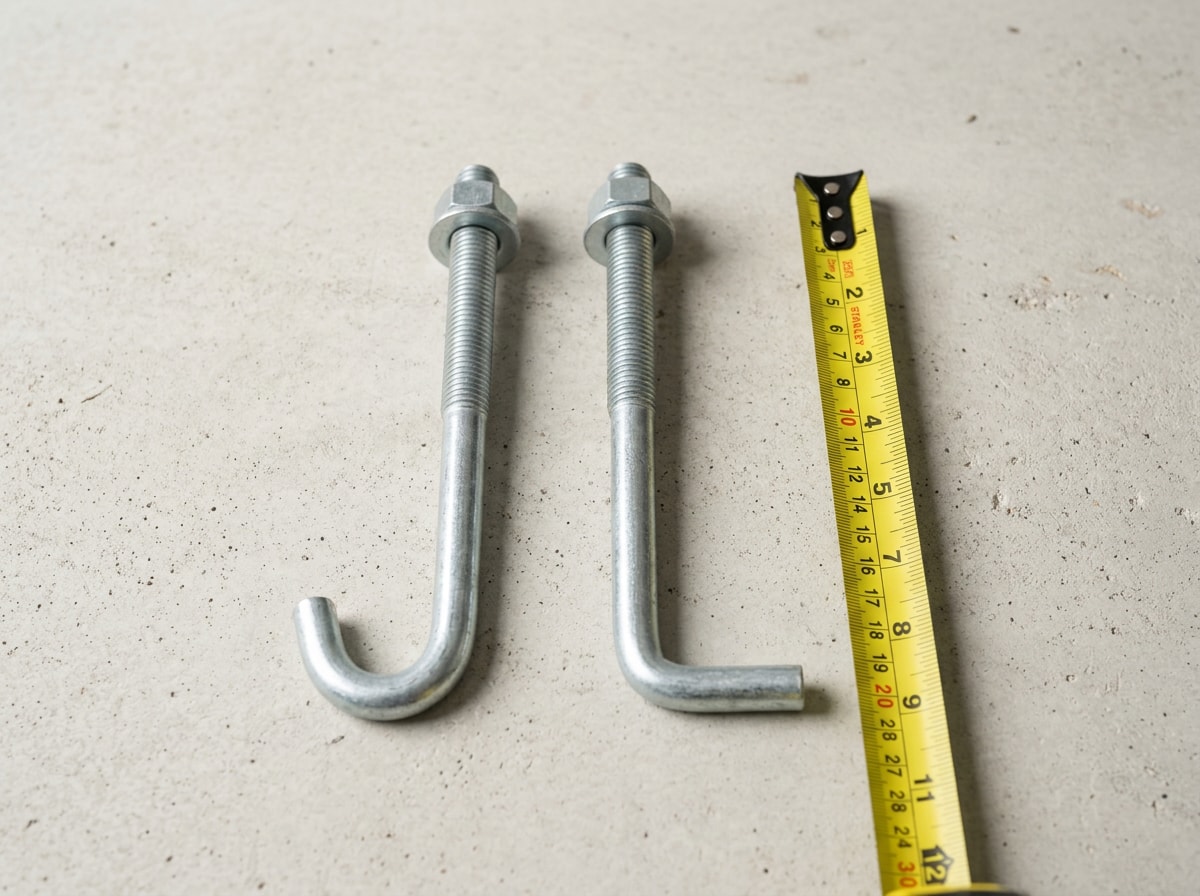
The L-bolt uses a straight threaded rod with a 90-degree bend at the embedded end. That hook resists pullout once the concrete hardens around it, which is why L-bolts are the most common cast-in-place anchor for sill plate anchoring and light pole bases. J-bolts work the same way with a tighter curve. Both are typically set using a template that keeps spacing consistent along the foundation wall.
Post-Installed Wedge and Adhesive Anchors
For existing foundations, bolts are usually secured after the fact using expansion or adhesive anchoring systems instead of cast-in-place hardware. These post-installed anchors go into pre-drilled holes and rely on friction, mechanical expansion, or cured epoxy to hold their grip.
Wedge anchors work well in solid, uncracked concrete, though some products carry a cracked-concrete rating worth checking before you buy. They're a common pick for base plates, equipment racking, and deck rail posts. Adhesive or epoxy anchors use an injected resin to bond a threaded rod into the hole instead. That often allows closer spacing to edges and other anchors than a wedge anchor permits. The right choice depends on the load, the concrete condition, and how close the anchor sits to an edge.
Material and Grade Selection: Fighting Corrosion and Stress
Choosing the right anchor type is only half the job. Material grade matters just as much in a climate like Baltimore County's, with humid summers, winter road salt, and repeated freeze-thaw cycles working against bare steel over time.
ASTM F1554 covers the chemical, mechanical, and dimensional requirements and associated test methods for straight and bent, headed and headless anchor bolts made of carbon, carbon boron, alloy, or high-strength low-alloy steel having specified yield strengths. It's the primary specification governing anchor bolts across North America, covering three yield-strength grades: 36, 55, and 105. Grade 36 low-carbon steel is the most common choice for residential sill plate anchoring, while Grades 55 and 105 step up strength for heavier structural or commercial loads. You can review the full spec on ASTM International's F1554 product page.
Grade alone doesn't tell the whole story locally. Any anchor bolt installed in a damp crawlspace, near a driveway treated with de-icing salt, or exposed outdoors through a Baltimore County winter is a candidate for galvanized or stainless hardware. Plain carbon steel rusts faster under those conditions, and a corrosion-resistant fastener upgrade is usually a small cost next to the labor of redoing the connection later.
How to Install Anchor Bolts in a New Concrete Foundation
Getting anchor placement right before, during, and immediately after the pour prevents the kind of rework that eats into a project's budget and schedule.
Before the pour, crews should stage:
- Anchor bolts matching the diameter and grade on the plans
- A layout template to keep spacing consistent
- Measuring tools, washers, and nuts
- Any required reinforcement
Anchor bolt placement should always follow the approved engineering drawings or building plans, not a rough field estimate. Setting a template into the foundation formwork ahead of time keeps every bolt aligned and plumb once concrete starts going in. There's no fixing a crooked bolt after the pour sets. Our crews handle layout and site prep like this regularly on grading and site preparation jobs throughout Baltimore County.
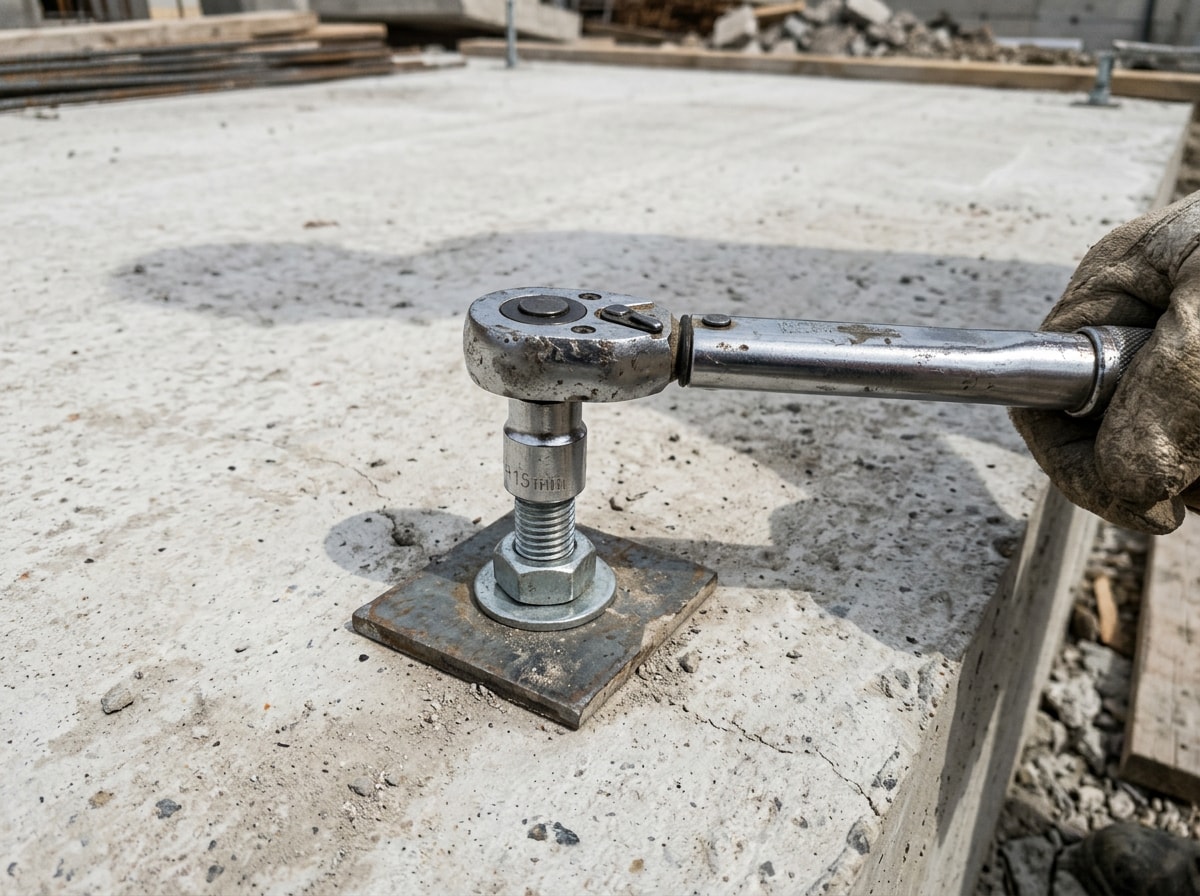
Over-tightening a mechanical anchor is one of the quickest ways to cause problems. It can crack the surrounding concrete or make the fastener's steel fail under stress. Torque specs from the manufacturer exist for a reason, and skipping them to "make sure it's tight" usually backfires.
Proof-load testing is a common quality check on post-installed anchors, applying a controlled test load below the anchor's rated capacity. It catches installation errors, like a hole drilled too shallow or an under-cured adhesive, without pushing the anchor or concrete to failure. On critical structural connections, this kind of verification is worth the extra time.
How to Install Anchor Bolts in an Existing Concrete Foundation
Retrofit work starts with drilling a hole to the exact diameter and depth called for in the project plans and the anchor manufacturer's instructions. Undersized or overly shallow holes are a leading cause of pullout failure later. This method covers situations cast-in-place bolts can't: adding a deck ledger, mounting an equipment pad, or installing a new railing on an existing slab or hardscape feature.
One local caveat: drilling into an older poured or block foundation in Baltimore County, particularly a load-bearing wall, may trigger a permit or inspection requirement depending on the scope of work. Check with the local building department before drilling. For foundation-adjacent concrete and paving work across the region, visit our homepage or request a free estimate.
Common Anchor Bolt Installation Mistakes That Fail Inspection
Most inspection failures trace back to planning and placement errors that happen before the concrete ever cures. Once it sets, there's no easy fix.
Picture a residential addition going up with a new sill plate tied into an existing foundation. The crew sets anchors on-site by eye instead of pulling exact spacing from the plans, placing two bolts closer together than code allows near a corner. The inspector flags the spacing violation during the sill plate inspection. The builder then has to either core-drill new holes with post-installed anchors or, in some cases, demolish and repour that section. A five-minute check against the engineering plans before the pour would have avoided the delay.
Other recurring issues:
- Bolts set too shallow for the code-minimum embedment
- Missing plate washers
- Bolts knocked out of plumb during the pour
- Skipping the manufacturer's spacing chart for post-installed hardware
None of these mistakes are complicated to avoid. They just require someone double-checking the layout before concrete goes in.
FAQ
How deep should anchor bolts be embedded in concrete?
For standard residential sill plate anchoring, IRC R403.1.6 requires a minimum embedment of 7 inches into concrete or grouted masonry cells. Heavier structural loads, seismic detailing, or high-wind zones require an engineer's specific embedment calculation rather than this general rule of thumb.
Can anchor bolts be reused after removal?
Foundation anchor bolts that have been removed can often be reused if they're still in good condition, with no visible corrosion, thread damage, or bending. A professional assessment is the safest way to confirm an anchor is still structurally sound before putting it back into service.
Should I use cast-in-place or post-installed anchor bolts?
Cast-in-place anchors work best for new pours, where accurate placement is achievable with a template before the concrete sets. Post-installed chemical or mechanical anchors are the better fit for retrofits, repairs, and any project where the concrete has already cured.
What is the minimum edge distance for anchor bolts?
The concrete edge is the weak point in any anchor design. Placing a bolt too close to the form edge can cause that edge to crack or spall out under load. Minimum edge distances vary by anchor diameter and type; the American Concrete Institute's ACI 318 anchoring-to-concrete provisions and related engineering guidance cover the basis for these clearances in detail.
Can self-tapping concrete screws replace anchor bolts?
Not for a code-governed sill plate connection. IRC R403.1.6 specifically calls for anchor bolts or approved equivalents at prescribed spacing and embedment, and self-tapping screws typically don't carry the same load ratings for that application. They're a fine choice for lighter-duty attachments like furring strips or brackets. Our guide to self-tapping concrete screws in Carroll County breaks down where they do and don't belong.
Do I need a permit to install anchor bolts in an existing Baltimore County foundation?
It depends on the scope. Drilling a few anchors for a railing or equipment pad usually doesn't trigger a separate permit, but structural retrofits, like new deck ledgers or load-bearing connections, often do. Confirm with the Baltimore County building department before you drill, especially on load-bearing walls.
Ready to get the sizing and layout right the first time? Request a free estimate and our crew will walk your Baltimore County project through code requirements before the pour.