Concrete patios in Edgewater, MD cost less upfront than pavers or natural stone, need almost no annual upkeep, and can be built to shrug off the clay soil and freeze-thaw winters that crack poorly prepped slabs around the South River. This guide breaks down 2026 pricing, finish options, and the build details that actually determine whether your patio lasts 10 years or 30. We'll also flag a permitting wrinkle specific to Anne Arundel County's Critical Area that most patio guides skip entirely.
2026 Concrete Patio Pricing in Edgewater, MD
Most Edgewater homeowners pay between $8 and $20 per square foot for a new concrete patio, depending on finish, size, and base prep. A plain broom finish sits at the lower end. Stamped or multi-color decorative work adds labor and material cost on top of that.
| Finish Type | Cost per Sq. Ft. | Typical 200-300 Sq. Ft. Patio |
|---|---|---|
| Basic broom finish | $8-$12 | $1,900-$3,300 |
| Stained or colored | $11-$16 | $2,600-$4,300 |
| Stamped / decorative | $14-$20 | $3,300-$5,800 |
Site conditions move these numbers more than most homeowners expect. A sloped yard, a tear-out of an old failing slab, or extra excavation for drainage can add to the base price before a single yard of concrete gets poured. If you want a number specific to your lot, get a free estimate and we'll walk the site with you before quoting anything.
Concrete vs. Pavers vs. Natural Stone for an Edgewater Backyard
Concrete isn't the only patio surface option, but it usually wins on upfront cost and long-term simplicity for Edgewater properties.
- Concrete: Lowest installed cost, no joint maintenance, and a failing section can often be patched or resurfaced instead of fully replaced.
- Pavers: Higher material cost and periodic joint-sand refills, but individual pavers can be swapped without redoing the whole surface.
- Natural stone: Highest material cost and the most complex, most expensive repairs if a piece cracks or shifts.
For most backyards, concrete's combination of lower cost and simple repair path makes it the default choice, which is why it's the material we install most often for patio projects in this area.
Stamped and Decorative Concrete Patio Finishes
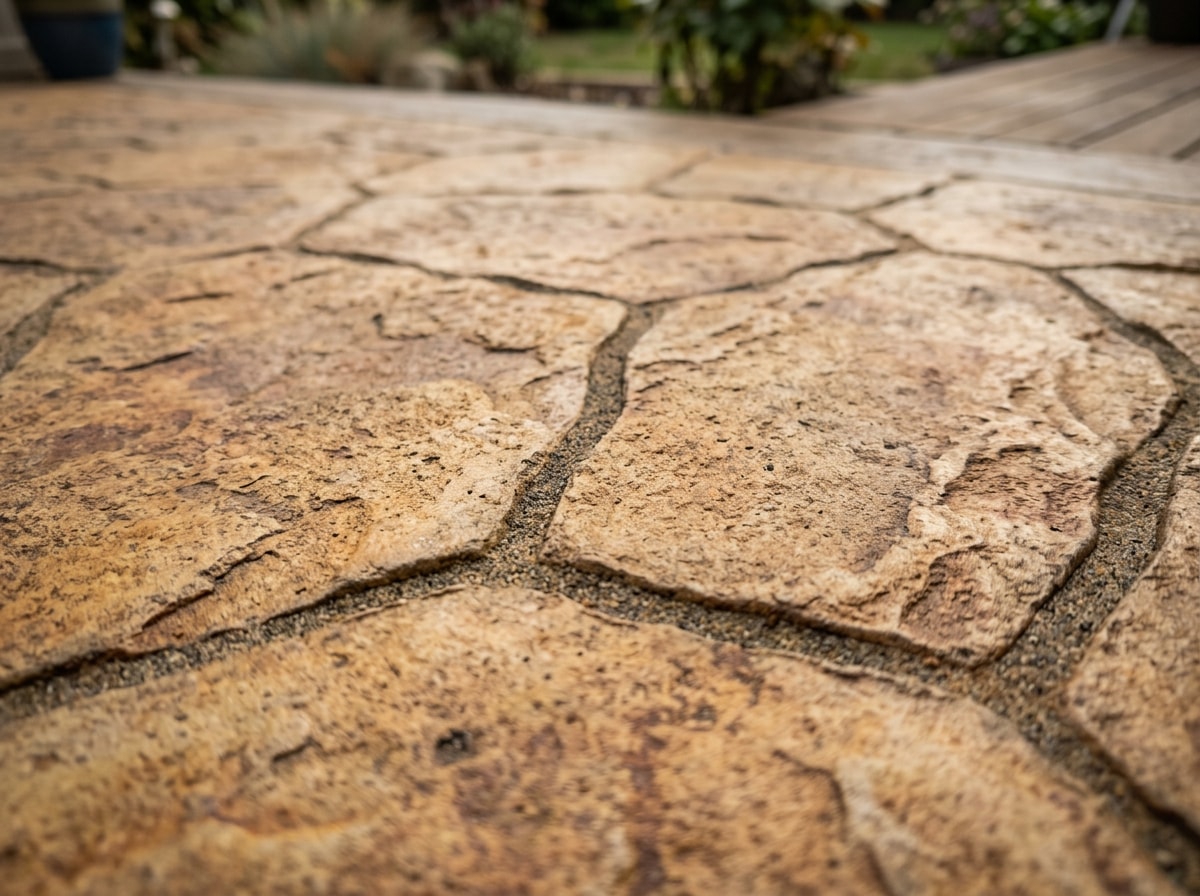
Stamped concrete replicates the look of flagstone, brick, or tile at a fraction of the material cost. A color hardener works into the surface, then textured stamps press a pattern into the concrete before it fully sets.
This gives homeowners real flexibility with pattern and color, from running-bond brick to irregular stone layouts. It works especially well on larger patio slabs and pool surrounds, where a uniform decorative pattern makes a bigger visual impact than it would on a small pad near a side door.
Why Anne Arundel County Soil and Winters Change the Build
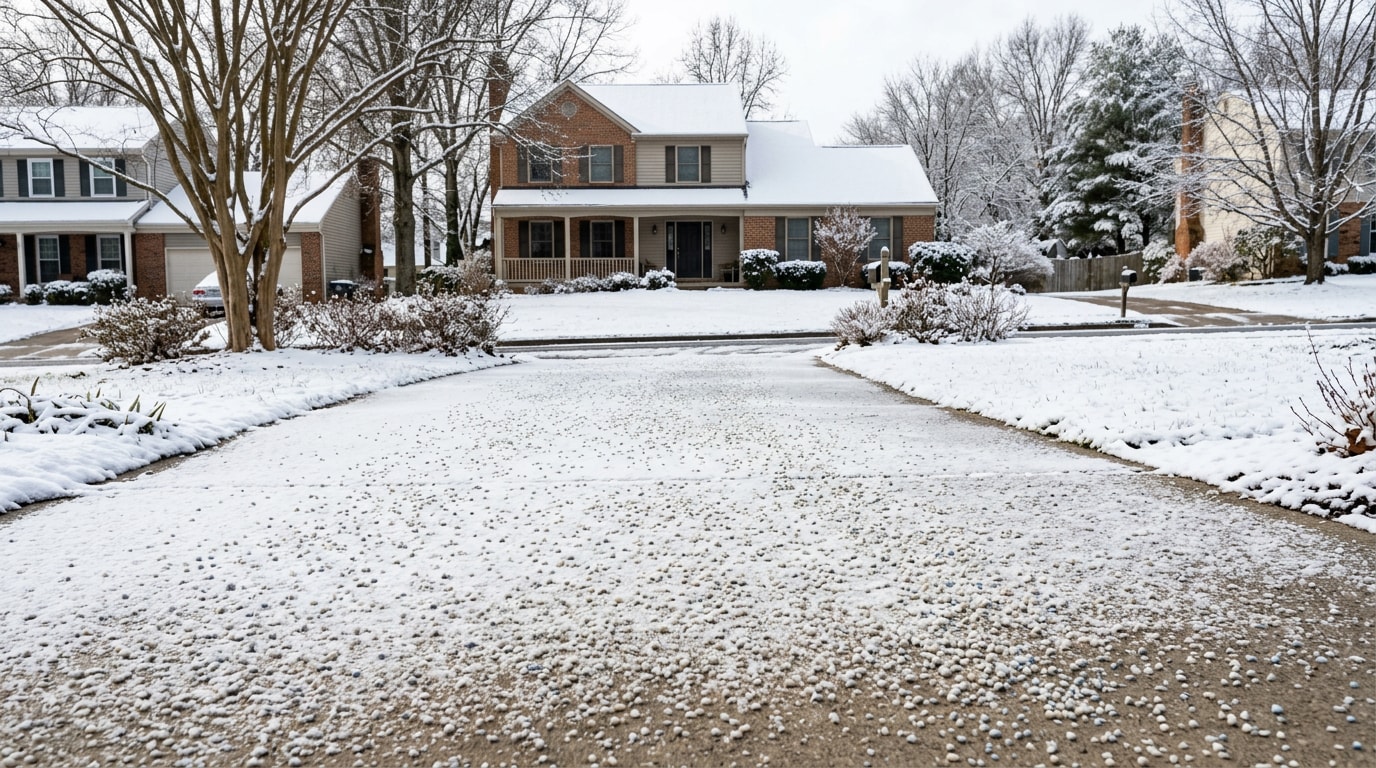
Edgewater's clay-heavy soil drains slowly, so water sits under or around a slab instead of moving away from it. When that trapped water freezes, it expands and pushes against the concrete from below. That's the mechanism behind most heaved or cracked patios, not simple "bad luck." Research on concrete pavement durability confirms that repeated freeze-thaw cycling is one of the most consistent long-term threats to outdoor concrete in cold-winter climates.
A correctly built slab counters this with proper grading for drainage, a compacted sub-base, and an air-entrained concrete mix rated for freeze-thaw exposure. On the patios we've poured across Edgewater yards near the South River, the single biggest point of failure isn't the concrete mix, it's a yard that slopes toward the house instead of away from it.
There's also a local wrinkle worth knowing before you plan a large patio: much of Edgewater sits inside Anne Arundel County's Chesapeake Bay Critical Area, where even a ground-level, uncovered concrete patio counts toward your property's impervious surface total. If your lot is already near its coverage limit, a new patio can trigger a variance request or require an offsetting measure like a rain garden or permeable paving section. That's a detail worth raising with your contractor before you finalize a layout, not after the concrete is poured.
Our Concrete Patio Installation Process
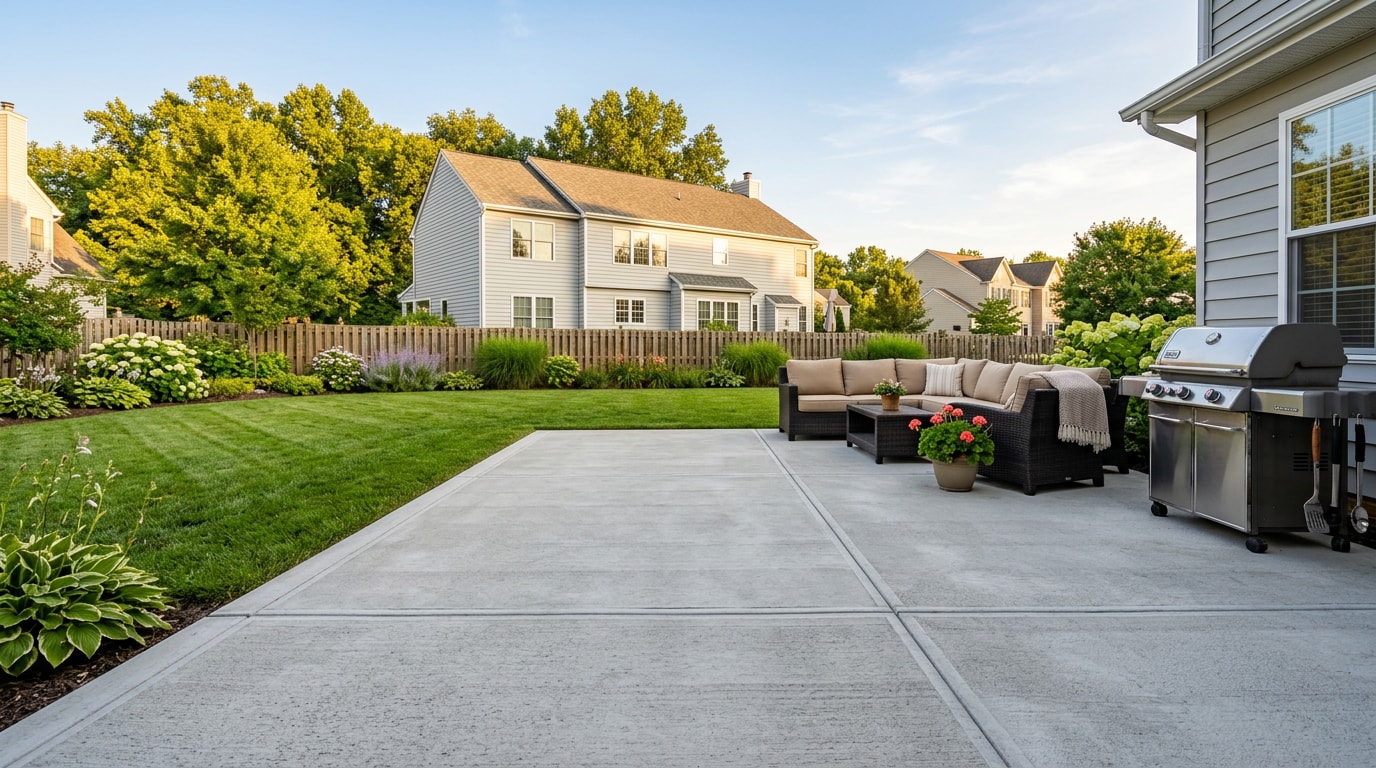
Every patio project follows the same core sequence, whether it's a small townhouse pad or a full multi-zone backyard layout built for grilling, dining, and lounging:
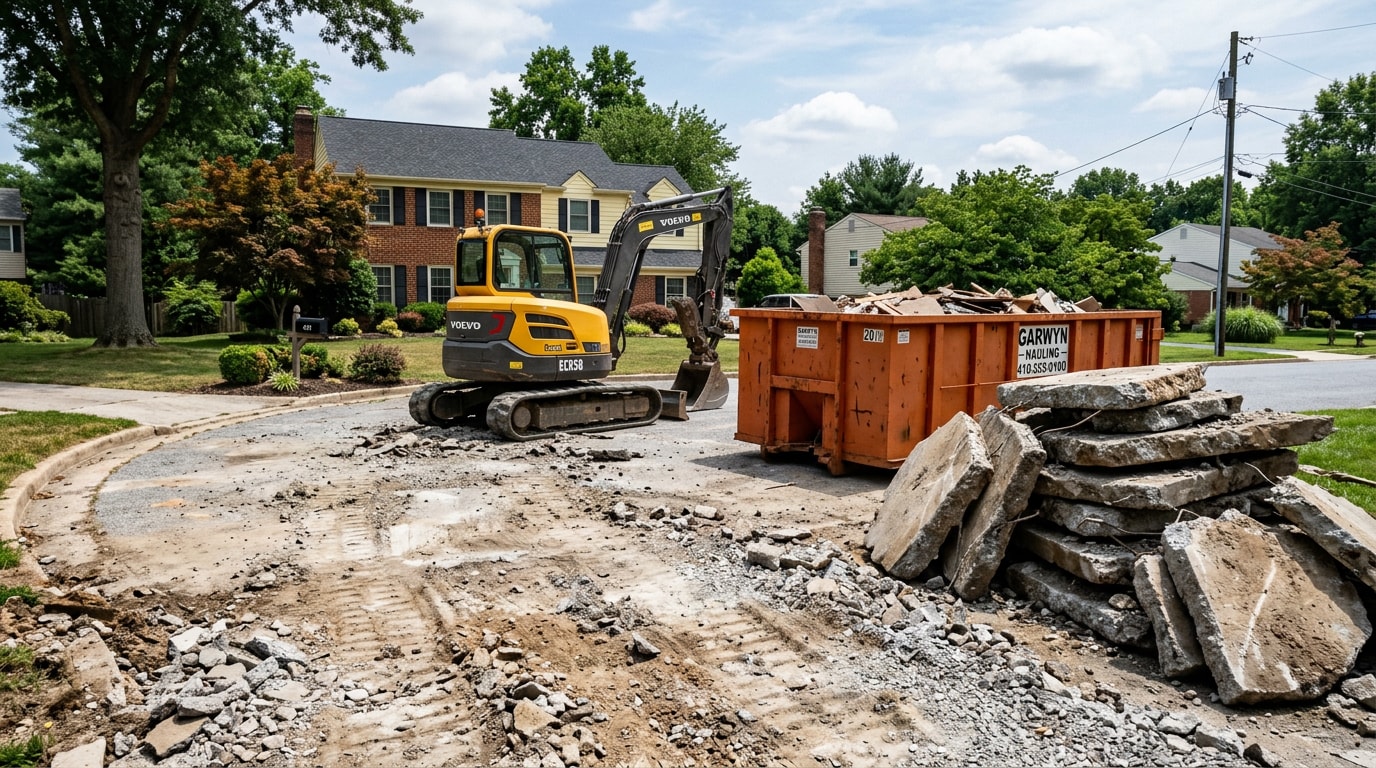
- Tear-out of the old surface, if one exists. Reusing a failing base just repeats the original problem.
- Grading to direct water away from the house and the new slab.
- Forming the layout, including any curved edges, multiple elevations, or attached walkways.
- Pouring the concrete mix at the right thickness and PSI for the expected load.
- Finishing, whether that's a broom texture, stamped pattern, or stained color.
- Sealing to protect against moisture intrusion before the first freeze-thaw season.
Custom layouts let you work in curved edges or a connected walkway rather than settling for a single rectangular slab. See examples of finished work on our projects page, or browse our full hardscape installation and walkway and patio installation services.
How We Build Patios That Don't Crack or Sink
Cracking and sinking almost always trace back to grading and base prep, not the concrete itself.
- Drainage grading directs water away from the slab instead of letting it pool underneath.
- Compacted sub-base gives the slab a stable platform that resists shifting as clay soil expands and contracts.
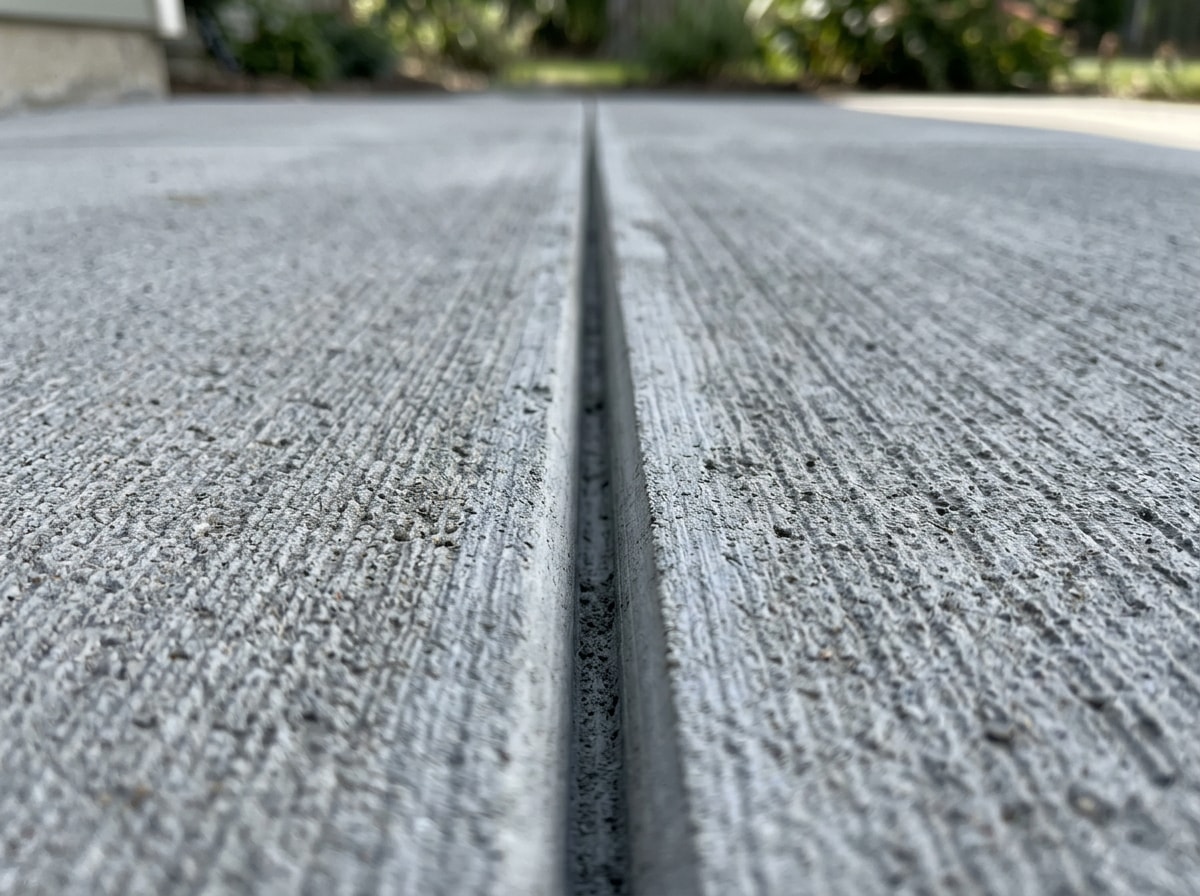
- Control joints, cut at the right spacing for the slab thickness, give cracking a planned path to follow instead of splitting randomly across the surface. Industry guidance from the National Ready Mixed Concrete Association puts maximum joint spacing at roughly 24 to 36 times the slab thickness, about 10 feet on a standard 4-inch patio.
- Full cure time before any furniture, grills, or foot traffic load hits the new slab protects its final strength.
If your current patio is already showing these problems, proper site grading and preparation during a replacement addresses the root cause instead of just patching the symptom. For a deeper look at slab leveling and installation specifics, see our guide on concrete slabs in Edgewater, MD.
Ready to stop guessing and get a real number for your yard? Contact us for a free, no-pressure estimate, or start at our homepage to see our full range of paving and concrete work.
FAQ
Do I need a permit for a patio in Edgewater, MD?
It depends on the project. Many ground-level, uncovered residential patios are exempt from a building permit in Anne Arundel County, though grading review may still apply, and covered patios or anything attached to the house typically do need one. Confirm your specific project against the county's permit lookup tool before work begins, and check your lot's Critical Area and impervious surface status if you're near the water.
How much does a concrete patio cost in Edgewater, MD?
Most homeowners pay $8 to $20 per square foot installed, depending on finish and site conditions. A basic broom finish runs toward the lower end; stamped or multi-color decorative work runs higher.
How thick should a concrete patio be?
A standard residential patio slab is 4 inches thick. Heavier features like outdoor kitchens or hot tubs may need a thicker, reinforced slab for added support.
How long does a concrete patio last?
A properly installed, well-maintained concrete patio typically lasts 25 to 30 years. Poor drainage, skipped sealing, and repeated freeze-thaw cycling can shorten that lifespan considerably.
What's the best time of year to pour a concrete patio in Maryland?
Late spring through early fall gives the most consistent curing conditions. Concrete can be poured in cooler weather, but it needs extra precautions against freezing before it fully cures, which adds cost and risk.
How do I maintain a concrete patio?
Maintenance is minimal: periodic resealing roughly every 2 to 3 years, routine cleaning, and prompt removal of stains or deicing residue. A good resealing schedule protects the surface against moisture intrusion and freeze-thaw wear.