Concrete safe ice melt is the difference between a driveway that survives twenty Maryland winters and one that starts flaking by year three. The chemistry inside the bag, not the "ice melt" label on the front, decides whether your slab holds up. Here's what actually protects concrete, and what quietly destroys it.
What Makes an Ice Melt Concrete Safe
Most concrete damage starts with chloride salts soaking into tiny surface pores. Water in those pores freezes, expands, and pushes outward. Repeat that cycle enough times in one winter and you get flaking, hairline cracks, or crumbling edges.
Carroll County's weather pattern makes this worse than it sounds. Days often climb above freezing before nights drop hard again, so the same moisture can freeze and thaw several times in a single week instead of once per storm. Our crews see the results every February: surface flaking concentrated near downspouts and driveway aprons, exactly where runoff refreezes over and over.
Planning for this from the start, rather than reacting after damage shows up, keeps a hardscape installation looking good for its full lifespan instead of turning into a repair call every spring.
Key Ingredients to Know
Not every de-icer is built the same way. The differences come down to chemistry, not marketing claims on the bag.
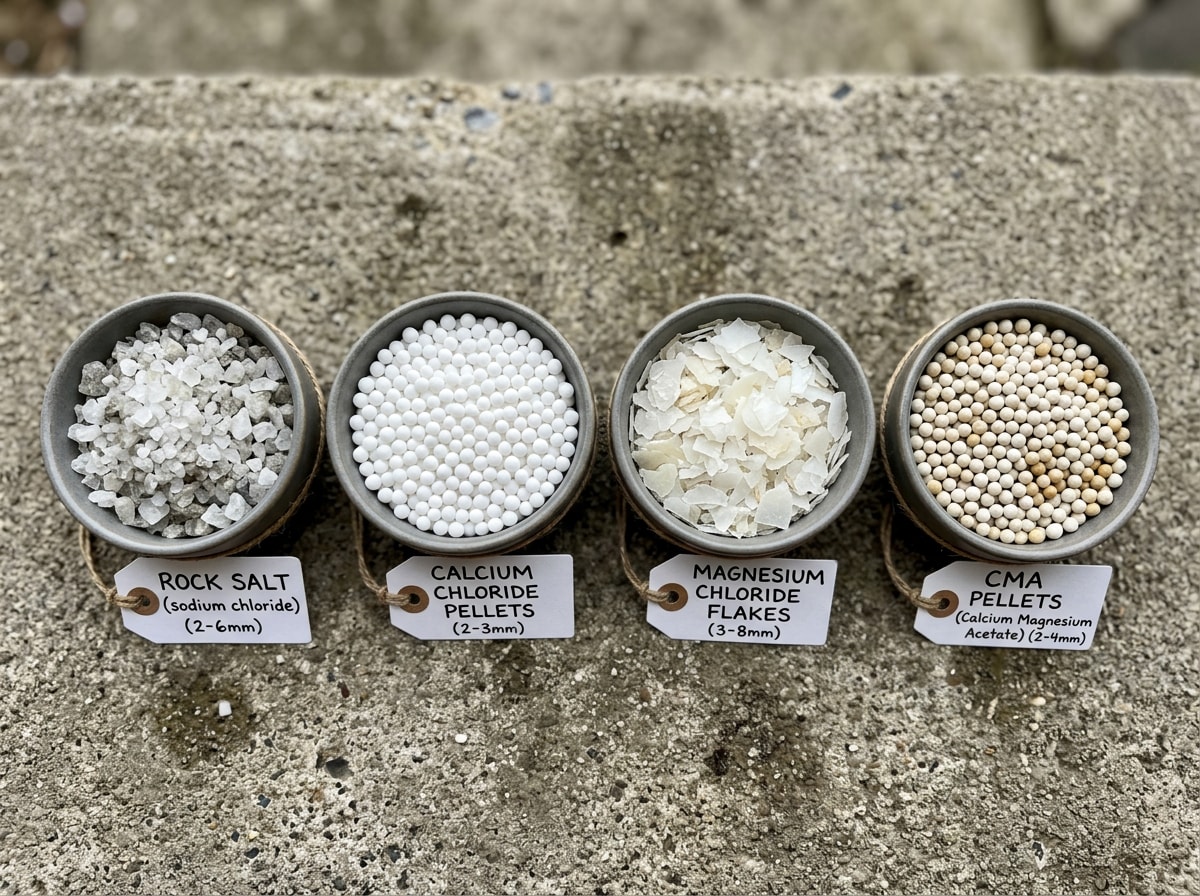
- Sodium chloride (rock salt): cheapest option, but the most corrosive to concrete with repeated use.
- Calcium chloride: melts fast even in extreme cold, though it's
highly corrosive to concrete and metals despite being gentler on plants than rock salt.
- Magnesium chloride:
effectively melts ice and snow down to about -13°F and is less damaging to plants than rock salt, but will still cause damage, especially when over-applied .
- Potassium chloride:
a naturally occurring material also used as fertilizer; it is highly corrosive but less damaging to plants than sodium chloride .
- Calcium magnesium acetate (CMA): the closest thing to a chloride-free option, though it typically costs several times more per bag than rock salt.
A chloride-free product applied heavily every single day can still stress a surface. A moderate chloride product used sparingly may cause little visible harm over a season. Quantity and frequency matter as much as the chemical itself.
Comparison of Ice Melt Types for Concrete
| Ingredient | Lowest Working Temp | Concrete Risk | Best Fit for Carroll County Winters |
|---|---|---|---|
| Sodium chloride (rock salt) | ~20°F | High | Occasional light frost only |
| Calcium chloride | ~-20°F | Moderate-high | Deep cold snaps |
| Magnesium chloride | ~-13°F | Moderate | Typical freeze-thaw stretches |
| CMA / potassium chloride | ~15-20°F (varies by product) | Low | Repeated freeze-thaw cycles, new or decorative concrete |
The calcium chloride vs. magnesium chloride debate usually comes down to temperature. Calcium chloride wins in extreme cold, but it carries real corrosion risk. Magnesium chloride handles the moderate, frequently-freezing conditions typical here with somewhat less aggressive chloride behavior, though neither is truly damage-free. For a closer look at how these salts interact with plants, soil, and concrete side by side, Iowa State University Extension's guide to using deicing salts in the home landscape is a solid technical reference.
The Safest Ice Melt Options for Carroll County Winters
Homeowners near wells, gardens, or storm drains often want an option that limits chloride runoff into soil and groundwater. CMA-based and potassium-based blends fit that need, offering a lower-chloride or chloride-free profile that's gentler on plants, pets, and nearby water sources.
Chloride that washes off driveways doesn't just disappear. Research tracked by the EPA on reducing salt and chloride in surface and groundwater covers winter maintenance best practices and the broader impact of de-icing salt on water quality , which is worth knowing if your property sits near a well or a stream buffer.
These lower-chloride blends also tend to leave less of the chalky residue that tracks indoors on boots and paws, which makes the higher price tag easier to justify for a lot of households.
Is Ice Melt Safe for New Concrete?
New concrete is more porous than fully cured concrete, so chemical deicers penetrate deeper and cause damage faster in the first year. This is where a lot of online advice oversimplifies things.
Technical guidance referenced by engineering researchers recommends a 30-day "drying period" before applying deicing chemicals to new concrete , citing established concrete industry sources. That's the bare minimum under lab conditions. In practice, most paving contractors recommend waiting a full winter season, closer to 12 months, before using any chemical ice melt on a new pour, because real driveways face freeze-thaw stress a lab sample doesn't.
If you're planning a new walkway or patio installation before the cold sets in, timing the pour early enough to get real cure time before the first hard freeze matters more than almost any other decision. Our guide to concrete slabs in Edgewater walks through leveling, cost, and cure timelines in more detail if you're planning ahead.
Safe Alternatives for the First Winter
During that first winter, skip the chemicals entirely and use these instead:
- Traction sand or coarse grit — gives shoes and tires grip without any chemical exposure to curing concrete.
- Mechanical snow removal — shoveling or a snow blower set to a higher blade height avoids scraping or gouging a fresh surface.
- Combined approach — pairing prompt shoveling with traction sand covers most new-driveway winter care needs with zero chemical risk.
How to Apply Ice Melt Without Damaging Concrete
Even a genuinely concrete-safe product can cause problems if it's used the wrong way. Pre-treating before a storm stops ice from bonding to the surface in the first place. Removing slush promptly after a snowfall keeps melted brine from sitting and refreezing in cracks or joints.
How Much to Apply
Less is almost always more here:
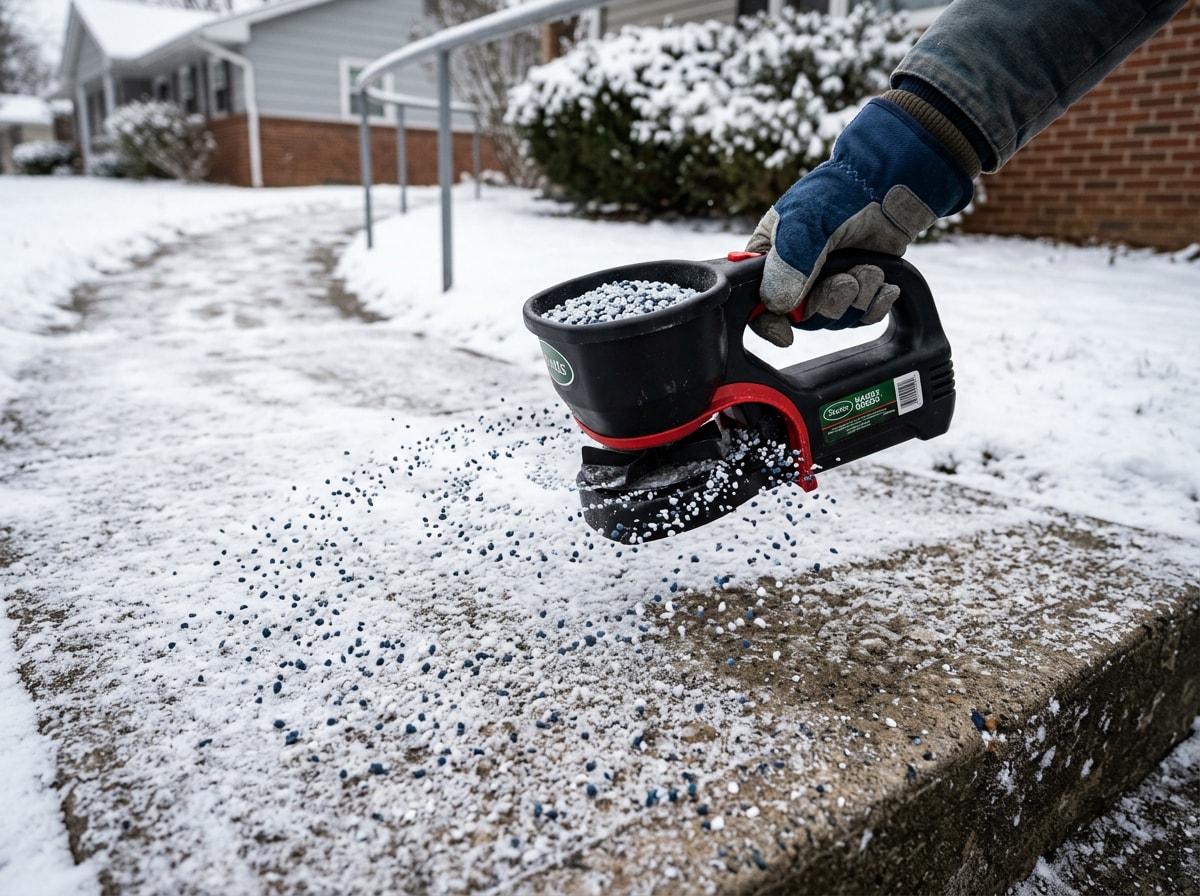
- Use a thin, even layer, roughly one handful per square yard, depending on the product label.
- Check the label's suggested application rate before spreading, then scale back slightly on areas that get afternoon sun.
- Avoid piling product in one spot; a heavy pile melts ice no faster than a thin, even layer.
Over-application doesn't speed up melting much. It mostly means more chloride sitting on the surface longer and a higher bill from buying extra bags. For larger properties, a seasonal snow and ice management plan keeps application rates consistent across an entire lot, which is hard to get right by hand storm after storm. If you manage a commercial lot or a large residential driveway in Carroll County, get a free estimate before the first real cold snap hits.
Common Mistakes That Damage Concrete in Winter
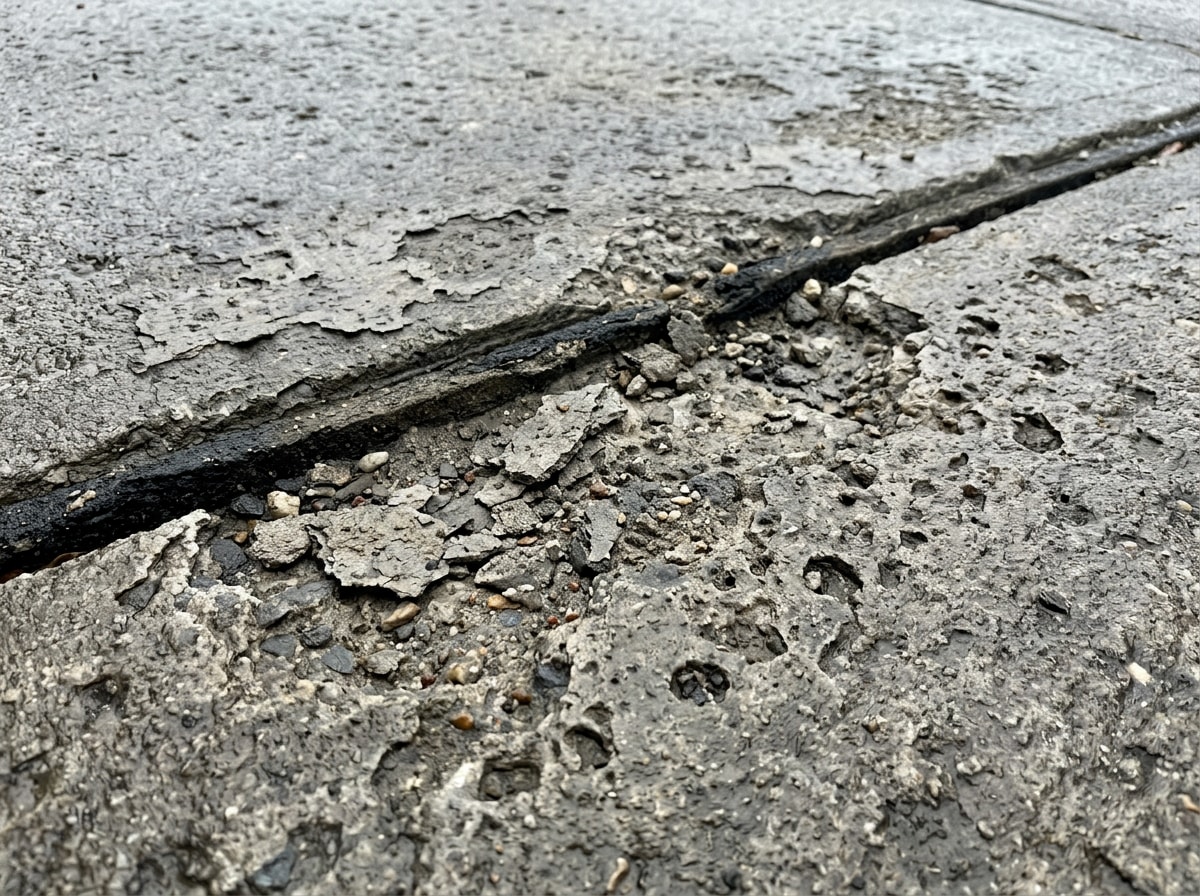
A handful of repeated habits cause most of the concrete damage homeowners see each spring:
- Switching between different ice melt products mid-season.
- Letting melted brine refreeze inside expansion joints instead of clearing it.
- Ignoring poor drainage near the foundation, which keeps surfaces wet longer.
- Using any chloride product on stamped, colored, or exposed-aggregate concrete.
Underneath all of these sits the same simple mechanism: water trapped in the pores freezes, expands, and pushes against the surrounding material. Repeated often enough, that pressure causes the flaking, pitted look known as scaling and spalling.
Good habits interrupt that cycle before it causes lasting damage. Clear slush promptly, seal cracks before winter sets in, and stick with one ice melt type for the whole season. Visit our homepage to see the full range of paving and concrete services we offer across the region if your driveway needs more than a winter fix.
FAQ
What Is the Safest Ice Melt for Concrete?
CMA (calcium magnesium acetate), magnesium chloride, and potassium chloride are generally the safest ingredient categories for concrete. They produce lower chloride concentrations and gentler reactions than straight rock salt, which reduces the risk of cracking or surface scaling over repeated use.
Does Ice Melt Damage Concrete?
Yes, certain types can, mainly through repeated chloride exposure combined with freeze-thaw cycling. The risk varies by ingredient, application rate, and how quickly melted slush gets removed, so not every ice melt causes the same amount of damage.
What Ice Melt Is Safe for Pets and Concrete?
Pet-safe, chloride-free formulas usually overlap closely with concrete-safe options, since both prioritize gentler chemical profiles over fast-acting chloride salts. Looking for "chloride-free" or "pet-friendly" on the packaging is a reasonable starting point for either concern.
Is Rock Salt Safe to Use on Concrete?
Rock salt is generally the least concrete-safe option available and should be avoided or used sparingly, especially on new or unsealed concrete. Repeated use raises the risk of spalling and surface flaking over time.
How Much Ice Melt Should I Use on a Driveway?
A thin, even layer is enough, roughly one handful per square yard as a starting point. Check the product label for its exact application rate, since formulations vary, and resist the urge to pile on extra product for stubborn ice.
How Long Should I Wait Before Using Ice Melt on New Concrete?
Most contractors recommend holding off on any chemical ice melt for a full winter season, close to 12 months, after a new pour. Lab-based technical guidance sets a lower floor of about 30 days, but real driveways face more freeze-thaw stress than test conditions, so the longer wait is the safer call. Traction sand and shoveling are the right tools in the meantime. For questions specific to your driveway, reach out to request a quote before the next snowfall.