Drilling into concrete in Frederick, MD trips up a lot of weekend DIYers because the material is dense, unforgiving, and nothing like drilling into drywall or wood. One wrong move with the wrong tool and you've got a cracked slab, a dead drill motor, or a bit stuck halfway through your foundation wall. This guide walks through the exact tools, sequence, and Maryland-specific rules you need to get a clean hole on the first try.
Our crews at EMGE Paving and Roofing drill, anchor, and core into concrete across Frederick County on a near-weekly basis, from deck ledger attachments to patio railing posts. That hands-on experience is baked into every step below, not just general advice pulled from a tool manual.
Essential Tools for Drilling Concrete
Before you touch a drill to concrete, gather the right equipment. Frederick's mix of older rowhomes and newer poured-slab construction both demand the same baseline gear: a capable drill, the correct bit, and real protective equipment.
Hammer Drills vs. Rotary Hammers
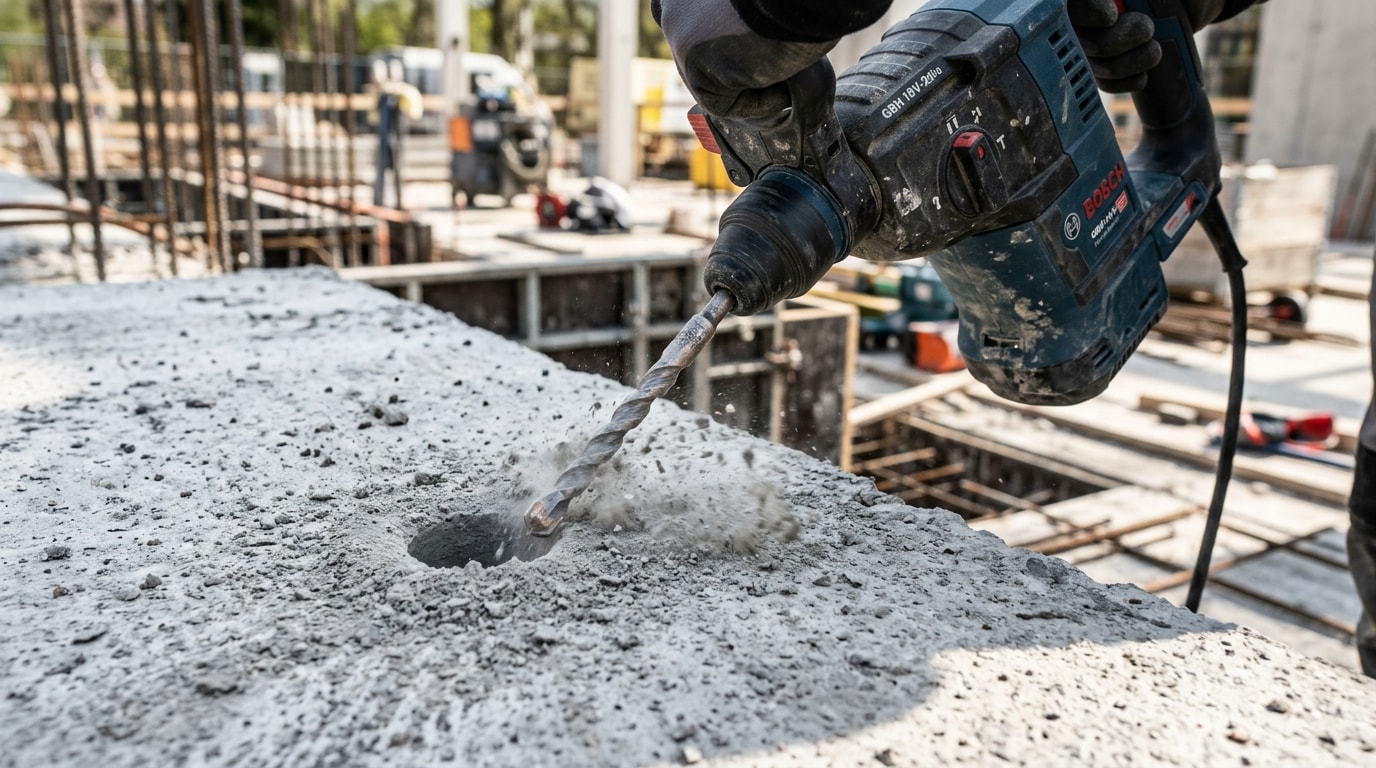
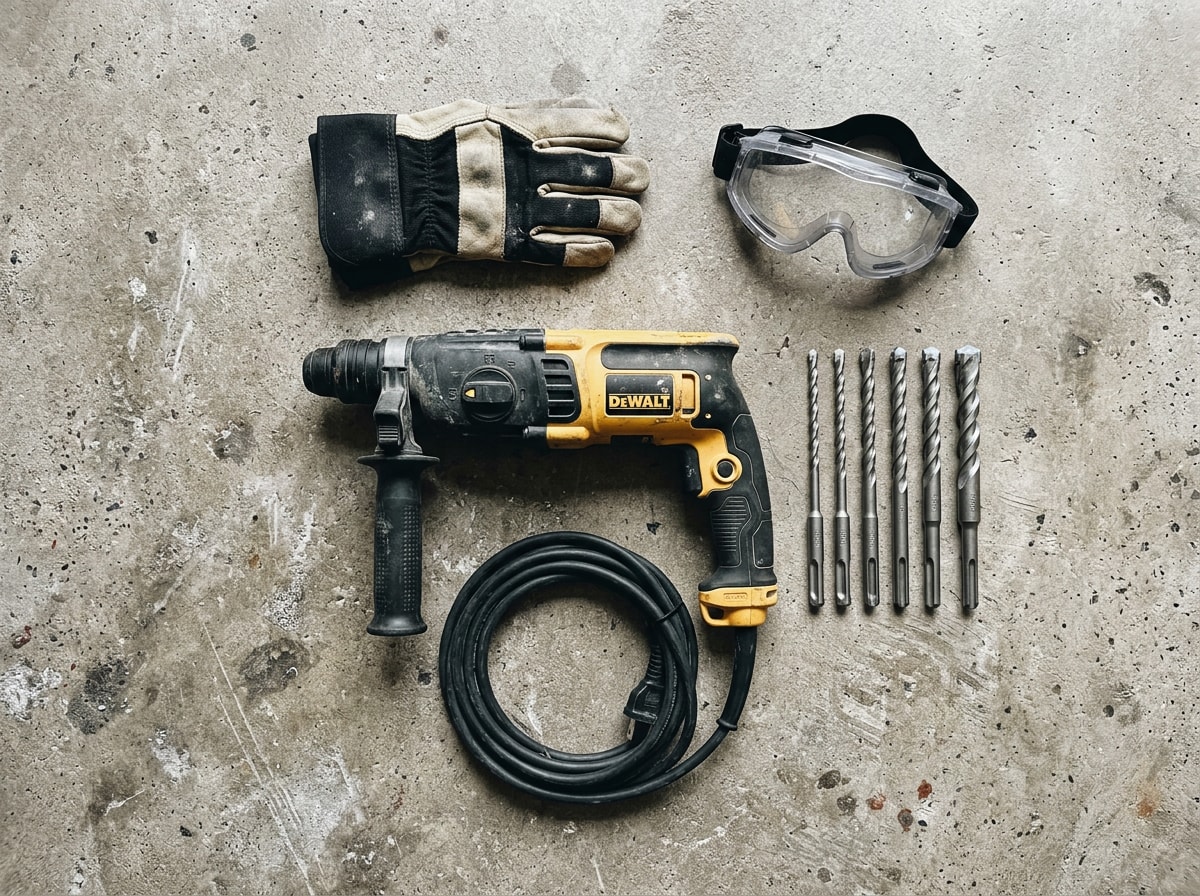
A hammer drill is the standard tool for drilling into concrete because it combines rotation with rapid hammering action, pulverizing the material instead of just cutting it. A standard drill lacks that impact force and will burn out quickly trying to bore through masonry. For larger-diameter holes or heavier-duty jobs, a rotary hammer delivers far more impact energy and holds up better over repeated use.
Either tool requires a masonry drill bit with a carbide-tipped head, since standard twist bits dull almost instantly against concrete's aggregate. Round out your setup with safety goggles, work gloves, ear protection, and a respirator rated for fine dust.
| Tool | Best Hole Size | Material Density | Typical DIY Use |
|---|---|---|---|
| Regular drill | Very small, shallow | Soft/aged concrete only | Light anchors, picture hooks |
| Hammer drill | Small to medium | Standard residential concrete | Shelving, railings, fixtures |
| Rotary hammer | Medium to large | Dense or reinforced concrete | Deck ledgers, heavy anchors |
If your project is bigger than a weekend fix, like setting posts for a new paver patio or walkway, it's often cheaper to have it built right the first time. See how we approach walkway and patio installation across the region.
Step-by-Step: How to Drill Into Concrete
Most reliable guides on this topic converge on the same basic sequence: prep the space, check for hazards, mark your spot, pick the right bit, start slow, then drill steady. Here's how that plays out from start to finish.
Prepare the Surface and Check for Buried Utilities
Clear the work area of furniture and lay down a drop cloth to catch dust and debris. Check first for anything hidden behind the surface, since water pipes, electrical wiring, or ductwork can turn a simple project dangerous fast.
Here's something most national drilling guides skip entirely: if you're drilling near an exterior slab, foundation edge, or anywhere close to buried lines, Maryland law requires a utility locate before you dig or drill deep near underground utilities. In Maryland, contact Miss Utility at least 3 full business days and no more than 12 business days before you plan to begin excavation or demolition. You can submit a locate request directly with Miss Utility of Maryland or just call 811. It's free, and it's not optional.
If you're drilling overhead or working from a ladder, confirm your standing surface is stable before you start. Rushing this prep step is where most avoidable accidents happen.
Mark the Hole Location and Depth
Mark your drill spot with a pencil and tape measure, then double-check the placement against whatever you're mounting before committing to the hole. Set a drill stop bar, or wrap a strip of tape around the bit, at the exact anchor depth you need, following the anchor manufacturer's specs.
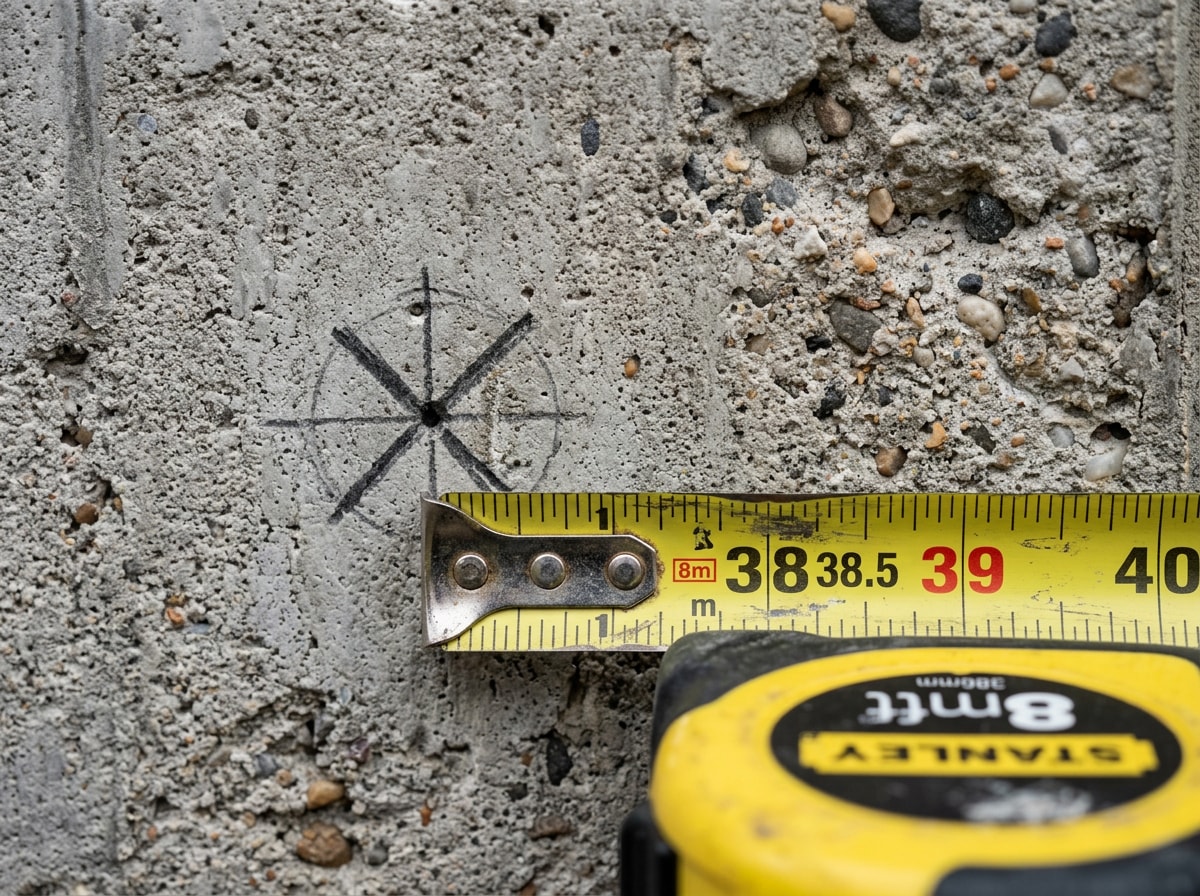
Homeowners in the area can also check our Frederick, MD service area page for guidance specific to local soil and slab conditions.
Choose the Right Drill Bit and Anchor Type
Pick a tungsten carbide masonry drill bit sized to match your anchor or fastener. Unlike wood bits, SDS bit designs are fluted along the shank, allowing them to travel up and down like a jackhammer as they work through concrete.
Bit diameter has to match the fastener. Too small and the anchor won't seat properly; too large and it won't grip. This matters most on structural connections. If you're anchoring a deck ledger board to a concrete or masonry wall, building codes aren't optional: since 2009, every edition of the IRC requires the deck ledger to be connected to the house floor band joist with ½-inch bolts or lag screws , and the same prescriptive approach applies to concrete and masonry attachment points. Review the ICC's technical breakdown on deck ledger attachment before you drill a single hole for a ledger board.
Start With a Pilot Hole
Begin at a slow speed to create a pilot hole. This keeps the bit from wandering off your mark before it has a chance to bite into the surface.
On hard, smooth concrete, bit wandering is common. A simple trick: tap a small divot with a nail set at your marked spot before drilling. That tiny hollow gives the bit something to ride in instead of skating sideways.
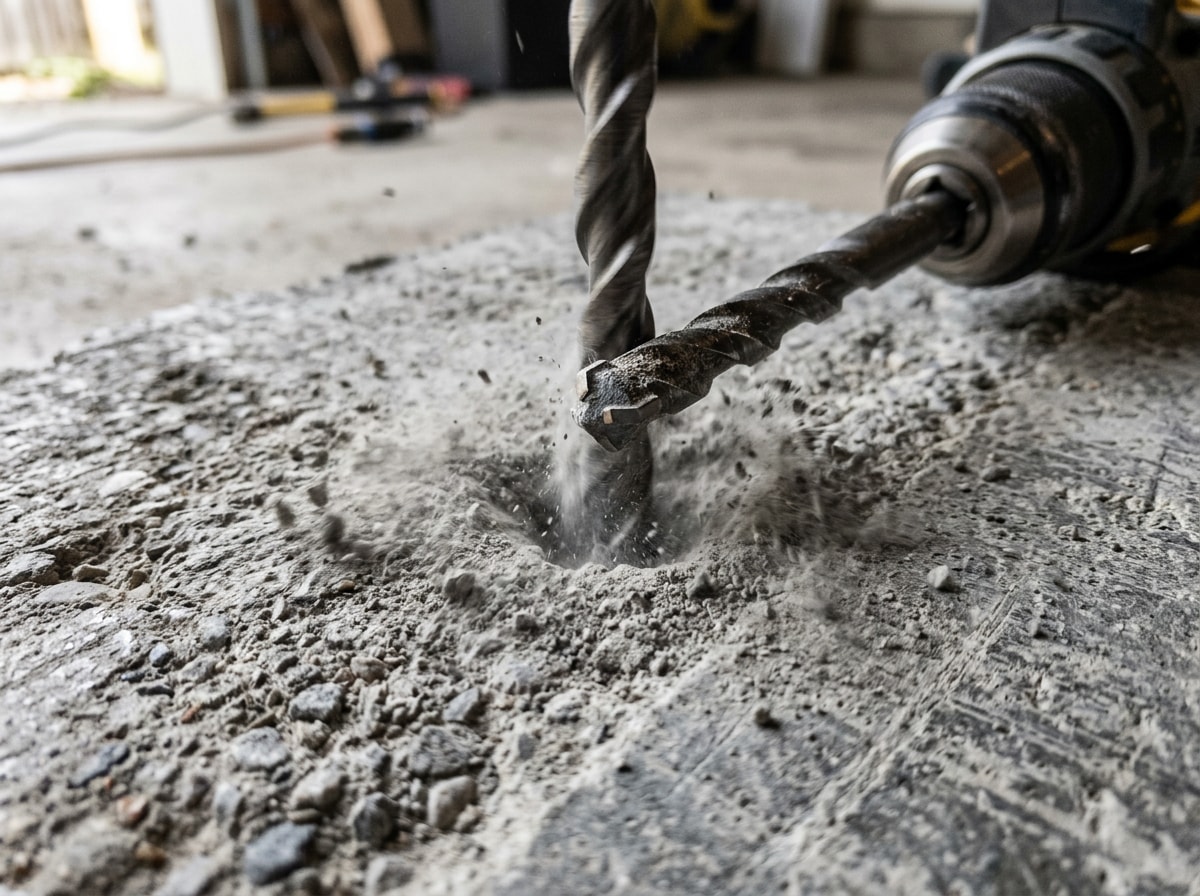
Plant your feet, grip the drill with both hands, and keep steady control throughout.
Maintain Steady Pressure and Control Dust
Apply firm, consistent pressure once the pilot hole is established, but don't lean on the drill. Too much force causes overheating and can damage both the bit and the surrounding concrete.
Periodically back the bit out to clear dust. This keeps the hole from clogging and keeps drilling efficient. If the bit ever feels too hot to touch, stop and let it cool before continuing.
Dust control matters for more than just drilling speed. The use of handheld and stand-mounted drills, impact and rotary hammer drills, and similar tools used to drill holes in concrete, masonry, or other silica-containing materials can generate respirable crystalline silica dust.
When inhaled over time, the small particles of silica can irreversibly damage the lungs. A wet-cut approach, a shop vacuum with a HEPA filter, or simply drilling outdoors with good airflow all help. Review OSHA's fact sheet on controlling silica dust from handheld drills if you're doing repeated or large-scale drilling.
Drilling Different Types of Concrete in Frederick
Not all concrete behaves the same way. Frederick has everything from decades-old foundations downtown to newly poured driveways and patios in the newer developments, and slab age and mix density both affect how a hole drills.
Older, softer concrete found in many of Frederick's historic rowhomes drills faster but can also chip or spall at the surface if you push too hard. Go slow at the edges.
Dense, newer concrete is tougher to penetrate and demands patience. Use a high-quality carbide bit, start with a smaller pilot hole before stepping up to your target size, and take breaks to avoid overheating. A shop vacuum or compressed air helps clear debris from the hole as you go.
Reinforced concrete with embedded rebar is where DIY hammer drills hit their limit. If you feel sudden resistance and a metallic grinding sound partway through a hole, you've likely hit rebar. Stop, back out, and reposition rather than forcing through.
If your project leaves behind a dusty slab or garage floor, our guide on how to clean concrete floors in Frederick, MD covers the cleanup side step by step.
Anchoring Into Concrete for Decks, Railings, and Patios
A lot of the drilling questions we get from Frederick homeowners aren't really about the hole, they're about what happens after. Deck ledger boards, patio railings, and post bases all rely on the anchor holding under real load, not just looking secure.
For deck ledgers attaching to a concrete or solid masonry wall, use code-rated expansion or adhesive anchors sized to the manufacturer's embedment specs, not whatever lag bolt happens to be in the garage. For railing posts set into a concrete patio or walkway, sleeve anchors or epoxy anchors generally outperform simple expansion anchors because they distribute load more evenly across the surrounding concrete.
If you're planning a full patio, walkway, or hardscape feature rather than a single anchor point, it's often more cost-effective to have the whole thing graded and poured correctly from the start. Our hardscape installation team handles that groundwork so you're not retrofitting anchors into a slab that wasn't built for them.
When to Call a Professional for Concrete Drilling
Some jobs go beyond what a homeowner's hammer drill can handle. Large-diameter holes, suspected rebar, structural slabs, or repeated heavy-duty drilling are all signs it's time to hire a concrete pro rather than risk cracking a slab or hitting reinforcement.
For clean, precise holes needed for utility, plumbing, or electrical conduit penetrations, professional core drilling is the right category to search for. A Frederick, MD contractor with coring equipment can cut smooth, accurately sized holes through thick or reinforced concrete that DIY tools aren't built for.
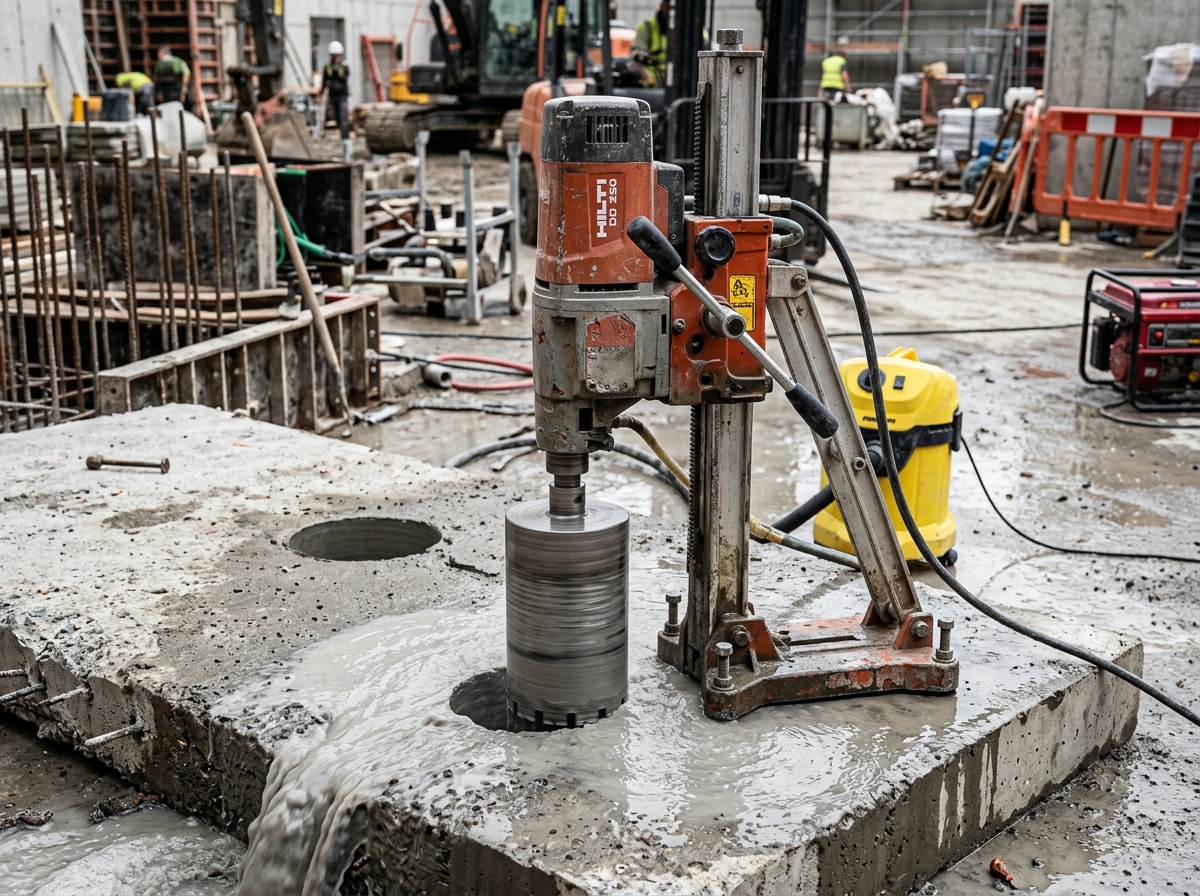
You can see examples of our concrete, paving, and hardscape work on our projects page, and browse our full lineup of services on the EMGE Paving and Roofing homepage. If your project calls for coring, patching, or a full hardscape rebuild, get a free estimate and we'll walk the site with you before anyone picks up a drill.
FAQ
Can You Use a Regular Drill to Drill Into Concrete?
You generally can't use a regular drill for structural concrete work. A hammer drill or rotary hammer uses impact energy to pulverize concrete at the bit tip, something a standard drill's rotation alone can't do. A regular drill might manage a very small, shallow hole in older, softer concrete, but it's not reliable for most projects.
Do You Need a Special Drill Bit for Concrete?
Yes. Standard twist bits dull almost immediately against concrete's aggregate. A carbide-tipped masonry bit is required because it's hard enough to withstand the abrasive material without wearing down or overheating.
What Do You Do If Your Drill Bit Gets Stuck?
Gently reverse the drill to back the bit out rather than forcing it forward. If it's still stuck, use pliers or a wrench to grip the exposed bit, and tap lightly around the hole's edge to loosen binding debris before trying again.
How Do You Stop Concrete From Cracking When You Drill?
Keep the drill at a 90-degree angle to the surface, stay well back from slab edges, and avoid pressing too hard. For larger holes, step up gradually through bit sizes instead of jumping straight to the final diameter.
Do I Need to Call Miss Utility Before Drilling Into a Concrete Slab?
If you're drilling near an exterior slab, foundation perimeter, or anywhere close to known utility lines, yes. Maryland requires a locate request through Miss Utility (811) before digging or deep drilling near underground utilities, with several business days of advance notice.
How Deep Should You Drill Into Concrete for an Anchor?
Depth depends on the anchor and fastener manufacturer's spec sheet, not a universal rule. Most residential wall and shelf anchors need roughly 1 to 1.5 inches of embedment, while structural anchors like deck ledger bolts require more, following the embedment depth listed on the anchor packaging.
---
This guide was prepared by the team at EMGE Paving and Roofing, a Maryland paving, hardscape, and roofing contractor serving Frederick County and the surrounding region. Questions about a specific drilling, anchoring, or concrete project? Contact us and we'll help you figure out whether it's a DIY job or one for our crew.