Polymer concrete in Hagerstown, MD solves a problem plain concrete can't: it bonds a durable, decorative layer to an existing slab instead of forcing a full tear-out. That matters in Washington County, where winter freeze-thaw cycles crack and pit ordinary concrete faster than in milder parts of the state. Below is what the material actually is, what it costs in 2026, and how to tell if your driveway, patio, or garage floor is a good candidate.
What Is Polymer Concrete, Exactly?
Polymer concrete isn't a brand name or a marketing term, it's a defined material category. Polymer concrete is a composite material in which the aggregate is bound together in a matrix with a polymer binder , according to the American Concrete Institute's official concrete terminology reference. That binder can be an epoxy, acrylic, or polyurethane resin instead of Portland cement, which is why overlays made with it resist moisture penetration and cure faster than a standard pour.
Two related terms come up constantly in Hagerstown project quotes, and contractors use them loosely:
- Epoxy concrete
is a mixture of epoxy resin and hardener, fine aggregate, and coarse aggregate , commonly used for garage and warehouse floor systems.
- Acrylic resin
is one of a group of thermoplastic resins formed by polymerizing the esters or amides of acrylic acid used to make polymer-modified concrete and polymer concretes , the basis for most decorative driveway and patio overlays.
Knowing the difference helps when you're comparing bids, since "polymer concrete" and "polymer-modified concrete" aren't interchangeable even though salespeople use them that way.
Polymer Concrete Overlay Cost in Hagerstown, MD (2026)
Pricing depends on slab condition, prep work, and how much decorative detail you want. Here's a realistic 2026 range for Washington County projects:
| Service | Price per sq. ft. | What drives the spread |
|---|---|---|
| Basic concrete resurfacing | $3–$7 | Slab condition, amount of crack repair needed |
| Polymer-modified decorative overlay | $7–$15 | Color, stamping, multi-coat systems |
| Epoxy or polyurea garage floor coating | $4–$12 | Coating thickness, flake or quartz broadcast |
For context, regional cost data on garage epoxy flooring puts professional installation around $3 to $15 per square foot or $154 to $174 for an average one-car garage that is 250 square feet in size and around $1,200 to $6,000 for an average two-car garage . Expect the low end of any range for plain gray resurfacing and the high end for metallic finishes, multi-color stamping, or thick-build garage systems rated for vehicle traffic.
Prep work is usually the biggest cost swing. A slab riddled with hairline cracks or spalling needs crack isolation and patching before any overlay goes down, and skipping that step is the single most common reason overlays fail early in this climate.
How We Resurface Concrete With a Polymer Overlay
The process is the same whether it's a backyard patio or a commercial loading dock, only the scale changes:
- Power wash the slab to strip dirt, oil, and loose material.
- Repair cracks with fabric reinforcement and polymer filler, leveled flush with the surrounding surface.
- Patch holes or spalled sections with epoxy mortar so the base is uniform before coating.
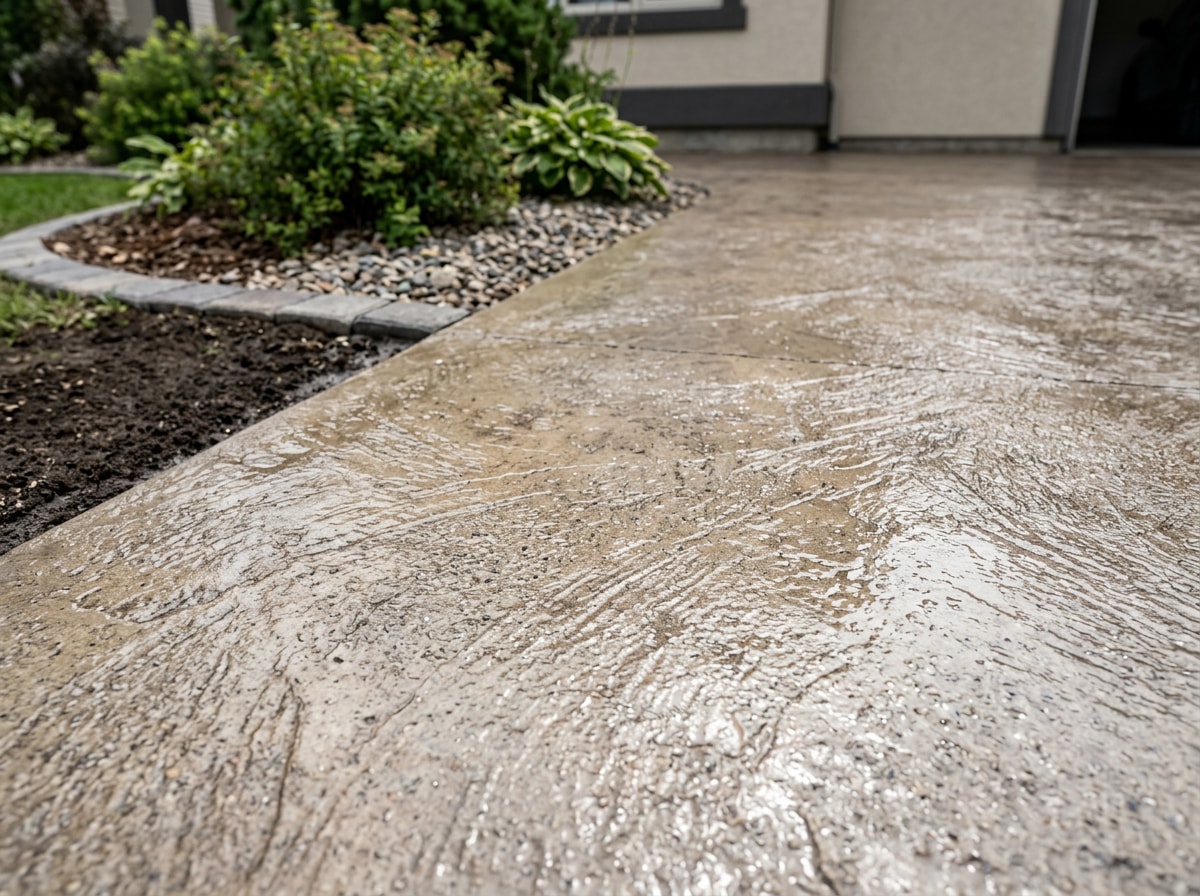
- Prime and spray the polymer overlay, then hand-trowel it to the finish you want, smooth, broom, or stamped.
- Apply color and a seal coat that protects the new surface from weather, de-icing salt, and UV exposure.
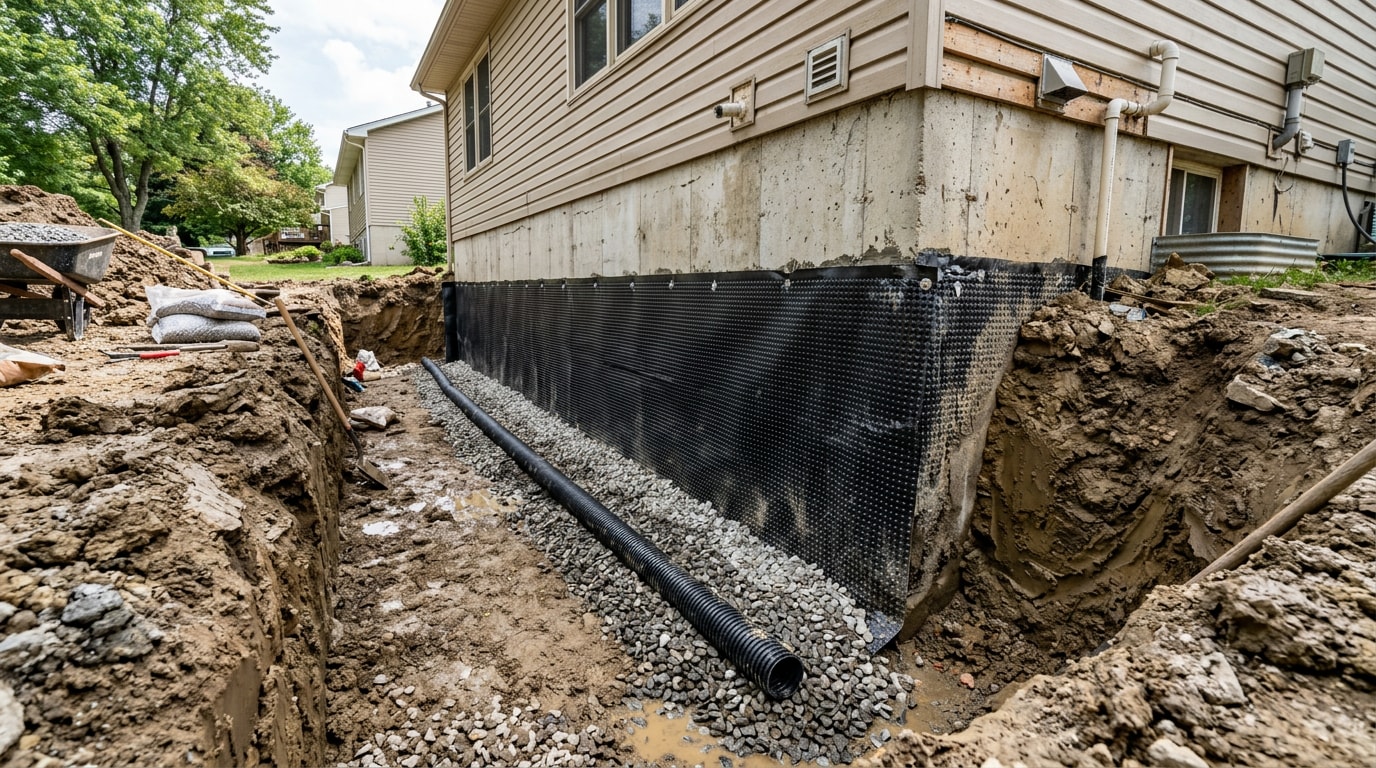
If your project also involves regrading a sunken section before the overlay goes on, that's handled separately through site grading and preparation rather than the overlay itself; the two should never be bundled into one step, since uneven sub-grade is what causes overlays to crack again within a year or two.
Polymer Overlay vs. Mudjacking for Sunken Slabs
Not every uneven slab needs a decorative overlay, sometimes it just needs to be lifted back into position first. Traditional mudjacking pumps a cement slurry beneath the slab, which is cost-effective but adds significant weight and can take longer to cure. Polyurethane foam injection, by contrast, expands rapidly, weighs a fraction as much, and often returns a driveway to service the same day. If a slab is sinking because of soil erosion or voids underneath, lift and stabilize it first; applying a polymer overlay on top of a slab that's still settling just wastes the overlay.
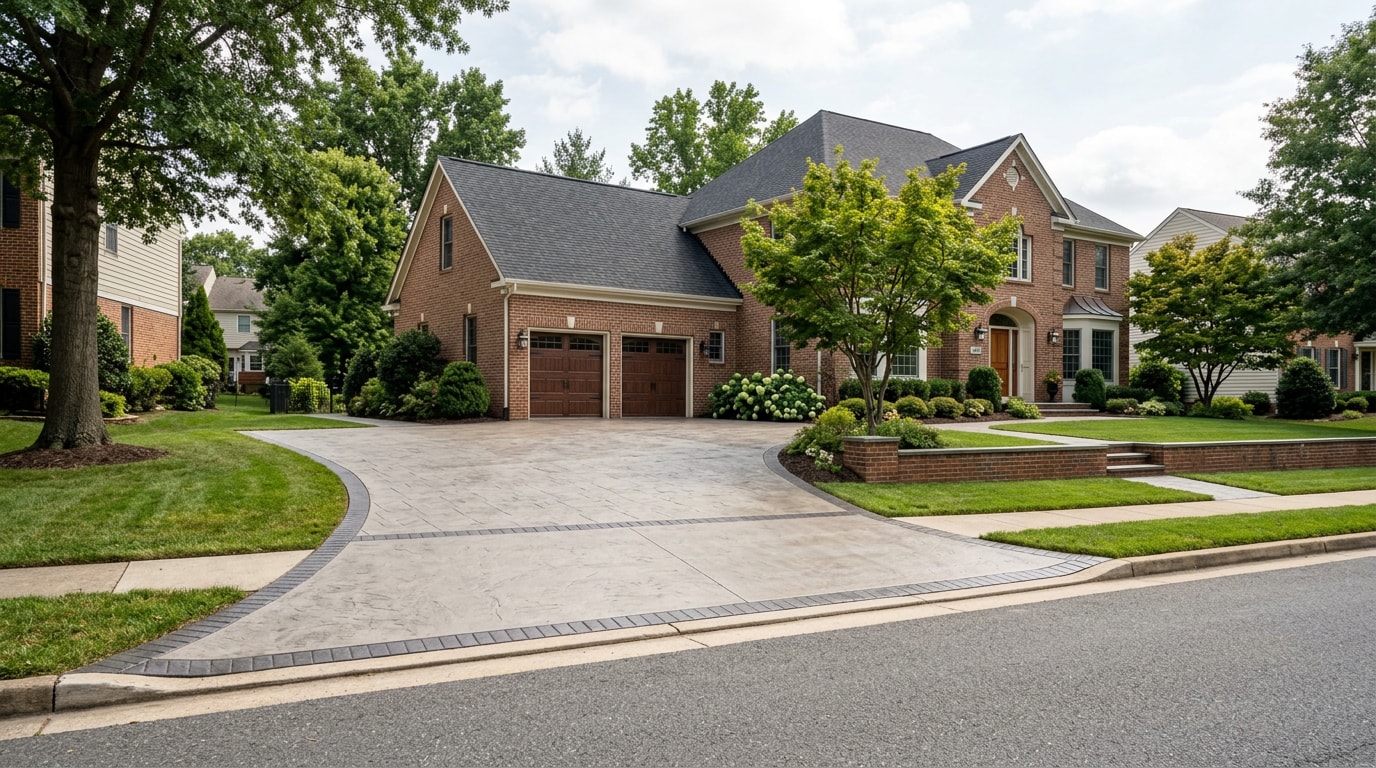
Decorative Polymer Concrete Overlay Options
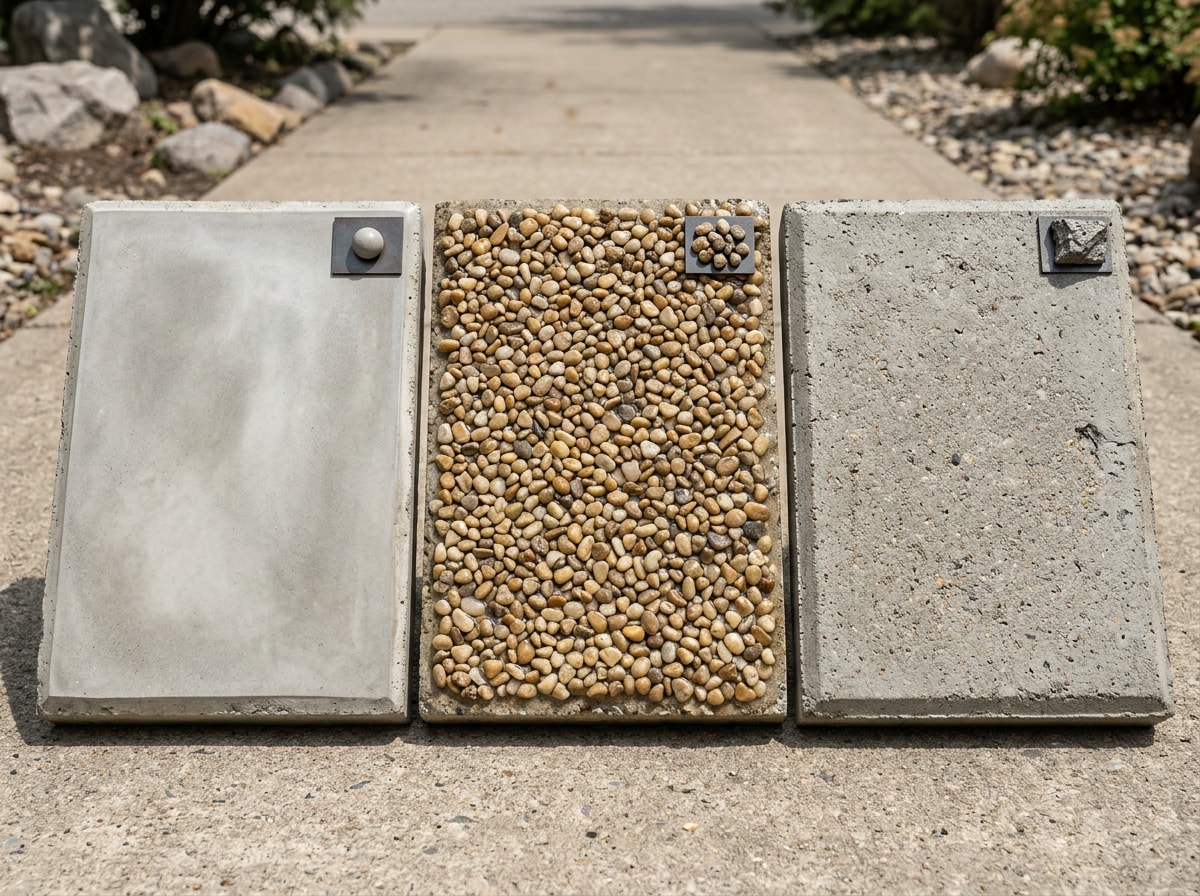
Three systems come up most often for Hagerstown driveways, patios, and pool decks:
| Overlay type | Typical thickness | Best for |
|---|---|---|
| Acrylic cement overlay | 1/16"–1/8" | Pool decks, patios, color/texture upgrades |
| River gravel epoxy overlay | 3/8"–1/2" | Porous, natural-stone look on walkways |
| Structural polymer overlay | 1/8"–1/4" | Repairing broken or cracked sections at near-original strength |
A structural overlay chemically bonds to the existing slab, which means a properly repaired section can end up stronger than the surrounding concrete rather than just cosmetically patched. For homeowners weighing a full hardscape upgrade instead of a repair, it's also worth comparing overlay cost against a new hardscape installation or a walkway and patio installation, since a badly cracked slab sometimes costs more to save than to replace.
Why Freeze-Thaw Cycles Make Overlay Durability Non-Negotiable Here
Washington County sits in a transition zone between Maryland's humid subtropical lowlands and the colder Appalachian uplands, which means more freeze-thaw cycling than Baltimore or the Eastern Shore see in a typical winter. NOAA's 30-year climate normals, the dataset used to establish local frost and freeze dates, show that this data is derived from the 1991–2020 U.S. Climate Normals from NOAA , and that record is what regional extension offices use to plan around seasonal freeze risk. The U.S. Climate Normals are a large suite of data products that provide information about typical climate conditions for thousands of locations across the United States, acting both as a ruler to compare today's weather and as a predictor of conditions in the near future.
In practice, that means Hagerstown slabs see repeated cycles of water intrusion, freezing, and expansion every winter. Plain concrete without a sealant or overlay is far more prone to surface scaling and spalling under that stress than a properly sealed polymer system. Overlay failures we see on service calls almost always trace back to one of two causes: the sub-base was never regraded before the overlay went down, or the seal coat was skipped and winter moisture got underneath.
Polymer & Epoxy Garage Floor Coatings in Hagerstown
Garage slabs hide their flaws until a gloss epoxy coating goes down, the reflective finish shows every low spot and trowel mark that was invisible under bare concrete. That's why floor prep, not the topcoat, is what separates a coating that lasts from one that peels within two years.
Control joint filling is a common add-on request: a flexible polyurethane sealant fills the joints before coating for a near-seamless look, though floor movement can still make joints faintly visible over time. Because epoxy and polyurea products involve strong solvent vapors during application, OSHA provides links to a variety of guidance documents related to respiratory protection, most created by the Occupational Safety & Health Administration, with some prepared by other federal agencies such as NIOSH , and any contractor applying these coatings in an enclosed garage should be following that guidance, not skipping ventilation to save time.
Decorative flake and quartz broadcasts add slip resistance on top of the base coat and let homeowners match garage floor color to trim or cabinetry. If your coating project is part of a larger commercial property upkeep plan, it typically falls under broader commercial property maintenance rather than a one-off service call.
Is Polymer Concrete Right for Your Hagerstown Property?
It's a strong fit if your slab is structurally sound but cosmetically rough, cracked, stained, or dated. It's the wrong fix if the slab is actively sinking, heaving, or settling, that needs leveling or [asphalt patching and repair]({{SITE_URL}}/services/asphalt-contractor/asphalt-patching-and-repair}-style structural work first, depending on the surface type. We walk every Hagerstown property before quoting an overlay specifically to check for settlement, because an overlay on an unstable base is money spent twice.
This guide reflects project patterns we see across Washington County driveways, patios, and garage floors, not generic manufacturer specs. For a related decorative concrete project, see our concrete fireplace installation cost guide for Baltimore County, which covers similar prep and sealing considerations. You can review examples of finished work on our projects page or start with a homepage overview of our full service lineup.
Ready to find out if your slab is a good candidate? Get a free estimate and we'll assess the base before recommending an overlay.
FAQ
Can old concrete be resurfaced?
Yes, as long as the base slab is structurally sound. We check for settlement, deep cracking, and sub-base movement before quoting; if the slab is still shifting, it needs leveling before any overlay goes on.
Is it a good idea to seal concrete?
Yes. A protective sealant shields a polymer overlay or epoxy coating from weather, de-icing salt, and everyday wear, which matters most through Washington County's freeze-thaw winters.
How long does a polymer concrete overlay last?
A well-maintained overlay typically lasts 10–15 years. Lifespan depends heavily on a consistent resealing schedule, usually every 2–3 years for driveways, and how much vehicle traffic the surface sees.
Is polymer concrete suitable for residential driveways and patios?
Yes. Residential polymer concrete works well for driveways, patios, and garages. Expect a higher upfront cost than plain gray concrete, offset by better crack resistance and more finish options.
How does polymer concrete compare to traditional concrete in cost?
Polymer overlays cost more per square foot upfront than a plain concrete pour, but they skip full demolition and replacement. Over a 10-15 year span, the overlay route is often cheaper than repeated patch-and-crack repairs on failing plain concrete.
Do I need a permit for a concrete overlay or garage floor coating in Hagerstown?
Resurfacing an existing slab or coating a garage floor typically doesn't require a permit since no new structure or footprint is added. If the project includes regrading, new footings, or structural repair, check with Washington County or City of Hagerstown permitting before work starts.
Does polymer concrete actually hold up better in Hagerstown winters?
Properly sealed polymer overlays resist the surface scaling that plain concrete develops under repeated freeze-thaw cycling, since the polymer binder is far less porous than a cement-only mix. The sealant, not just the overlay, is what keeps winter moisture from getting underneath.